The Complete Growth Platform for Independent Advisors — Unlimited Reports, Lead Gen, Support, Training & More|
Trusted by 8,000+ Advisors with 214,000+ Reports Generated
|See Stonewood in Action|
The Complete Growth Platform for Independent Advisors — Unlimited Reports, Lead Gen, Support, Training & More|
Trusted by 8,000+ Advisors with 214,000+ Reports Generated
|See Stonewood in Action|
Who among us hasn’t thought, “I’d like more clients with more assets”? Wanting high-net-worth clients is easy. Earning their attention is harder.
High-net-worth savers tend to have more advisors calling, more complicated finances and less patience for generic pitches. They want someone who understands their specific problems and can show them, with their own numbers, what’s at stake.
The good news? Marketing to high-net-worth individuals comes down to three things you can control: the right message, the right channels, and the right client experience. This guide covers each, plus how to turn a wealthy prospect into a long-term client.
Close More Business with Stonewood Reports
Easy to run. Easy to present. Pick the report that fits your next client conversation and we'll send a sample to your inbox immediately.
Roth Done RightTax & IRMAA Analysis
Annuity AlphaFIA vs. Managed Account
Legacy Done RightLife Insurance Analysis
Total Tax BurdenRetirement Tax Snapshot
Who counts as a high-net-worth individual?
There’s no single legal definition, but the wealth management industry generally sorts people by liquid financial assets, not counting their primary home. Capgemini’s World Wealth Report, a widely cited industry study, uses these tiers:
Segment
Typical threshold
Mass affluent
$100,000 to $1 million
High-net-worth (HNW)
$1 million to $5 million
Very-high-net-worth
$5 million to $30 million
Ultra-high-net-worth (UHNW)
$30 million or more
Liquid financial assets, excluding primary residence. Thresholds as commonly used in industry research; see Capgemini World Wealth Report.1
It’s a growing group. Capgemini reports the global HNWI population rose 7.9% in 2025 to 25.3 million people, holding $98.3 trillion in wealth.1
For many independent advisors, the sweet spot is the top of the mass affluent tier through the lower HNW tiers: people with meaningful savings in IRAs and 401(k)s and real questions about taxes, income and legacy. We’ll focus this guide on that audience.
What high-net-worth clients want from an advisor
In Capgemini’s 2026 research, only 17% of HNWIs said their wealth advisory experience felt seamless and personalized.1 The same research found 97% of wealth management firms still segment clients mainly by how much money they have.1
That gap is your opening. High-net-worth prospects tend to look for:
Specific answers, not general advice. “Here’s what higher taxes could cost you” lands better than “taxes may go up.”
Coordination. Their CPA, estate attorney and advisor often work in separate silos. An advisor who connects the pieces stands out.
Proactive communication. They want to hear from you when something changes, before they read about it somewhere else.
Respect for their time. Short meetings, clear takeaways, and no hard selling.
If you want to go deeper on tailoring your outreach, see our guide to personalized marketing.
The right message for high-net-worth savers
Should you treat high-net-worth savers like regular savers who happen to have more money? No. Their concerns overlap with your other clients, but the stakes are bigger and the rules get more complicated.
In our experience working with advisors, two topics tend to draw high-net-worth interest across seminars, webinars, email and social media: taxes and legacy planning. A third, legislative risk, ties them together.
1. Taxes
Truthfully, taxes could fill all three spots on this list. The more assets a saver has, the more there is to tax, and the more ways their assets can be taxed.
High earners can face layers that other clients may not. For example, the 3.8% net investment income tax applies to some income above $200,000 for single filers and $250,000 for married couples filing jointly.2 Larger IRA balances can mean larger required distributions later, which can push retirees into higher brackets and higher Medicare premiums through IRMAA brackets.
One frame that tends to open the conversation: a large IRA or 401(k) balance includes a debt to the IRS. That tax comes due at some point, for the saver or for their heirs. The question is whether they pay it at today’s known rates or in the future at whatever rates Congress may set.
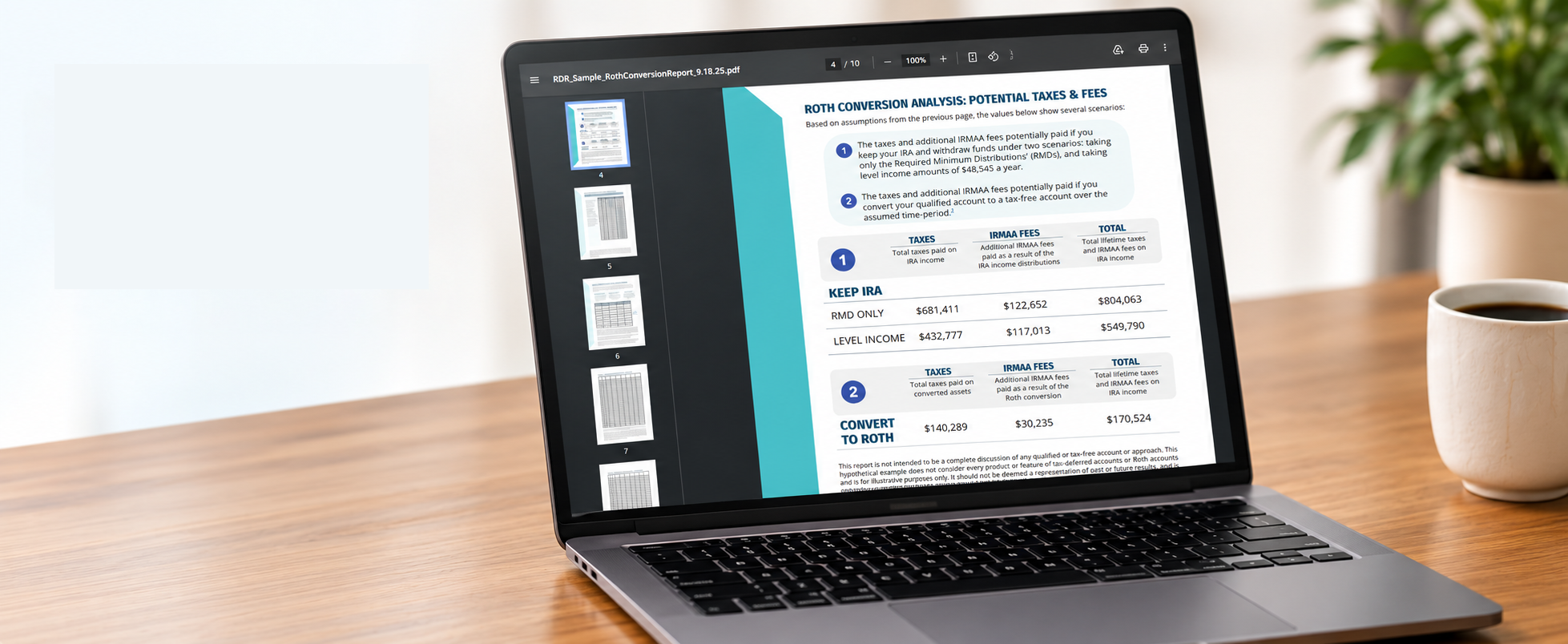
Talking about taxes in general isn’t enough. Many savers already know taxes can be an issue in retirement. What moves them is seeing their own number. Tools like Stonewood’s Roth Done Right software can analyze the tax and IRMAA impacts of converting funds in multiple scenarios. The software delivers a compliant, client-facing report that can be generated in under 60 seconds – no tax return needed.
2. Estate planning and legacy
After taxes, legacy is the topic that tends to draw high-net-worth interest. And the rules have changed. For 2026, the federal estate tax basic exclusion is $15 million per person, up from $13.99 million for 2025.3
While that may take federal estate tax off the table for many of your clients, their heirs can still face hefty income taxes on inherited retirement accounts.
Under the SECURE Act, many non-spouse beneficiaries need to empty an inherited IRA within 10 years.4 For a successful adult child, those distributions can land on top of their own peak-earning income. It’s a gift to the kids that can come with a tax bill stapled to it.
Tools like Stonewood’s Legacy Done Right model what heirs may actually keep after taxes under different approaches, so the family can compare their options side by side. Whether you’re suggesting Roth conversions, life insurance or a blend of multiple strategies, Legacy Done Right can quickly give your clients the analysis they need to make decisions fast.
3. Legislative risk
Every two years we get a new Congress. Tax rules that look settled today can change with each administration and Congress.
High-net-worth savers often have more exposure to rule changes, because they have more assets in more places. That makes legislative risk a natural topic for this group. The message is preparation: we don’t know what Congress will do, so it may make sense to have some assets in accounts taxed in different ways.
Keep in mind, here at Stonewood we’re not CPAs. We build analysis tools to help advisors evaluate the tax consequences and potential tax savings of different strategies. Be sure to work with a qualified tax professional on any tax strategy for your higher net worth clients.
How to market to high-net-worth individuals: The right channels
The best message in the world won’t help if no one hears it. Many traditional advisor marketing channels can reach high-net-worth savers, but they work best when you adjust them for this group.
Referrals and centers of influence
Referrals are often the strongest path to high-net-worth clients. Wealthy people tend to know other wealthy people, and they trust a recommendation from a friend more than an ad.
The challenge is that “Do you know anyone who could use my help?” puts your client on the spot. Give them something of value to pass along instead. A complimentary retirement tax analysis or a copy of a book is easier to offer a friend than a sales pitch.
One advisor in Nashville told us the Retirement Tax Bill lead program changed how he asks for referrals. Instead of asking for a cold name, he offers clients a complimentary retirement tax analysis to give to a friend.
Don’t overlook professional partners. CPAs and estate attorneys work with high-net-worth families every day. A partner who sees you as the person who handles the tax side of retirement income can become a steady source of introductions.
Exclusive events and seminars
Think high-net-worth savers won’t come to a seminar? They will, if it feels worth their evening. That usually means a smaller guest list, a better venue, and a topic built around their concerns, not a general retirement overview. Our guide to seminar marketing covers the planning side.
An advisor in Kentucky once hosted a seminar just for high-net-worth prospects on a boat, with a gourmet dinner. He paired the setting with Stonewood’s Rising Tax Risk in Retirement presentation. The combination of a strong tax message and a memorable setting filled the event. Results may vary by advisor and market.
LinkedIn and social media
Business owners, executives and professionals spend time on LinkedIn, and many of them are your future high-net-worth clients. Thoughtful posts on taxes and legacy, plus genuine engagement in the comments, can build familiarity long before the first meeting.
A book gives a high-net-worth prospect something worth their time, and it gives you credibility before you say a word. The Road Less Taxed, by Becky Ruby Swansburg and Neil Wilding, is one of the industry’s top-converting titles for higher net worth clients. It’s written to help savers uncover the tax risks that could be coming from Washington – and it can be read in under 90 minutes so prospects will engage. With Stonewood’s Custom Book Program, you can even add yourself to the cover of the book, as author of the foreword. For ways to put books to work, see our post on book marketing.
Regular articles, videos and guides do the same work at a smaller scale. Our guide to content marketing for financial advisors covers how to build that library.
Email marketing to high-net-worth clients
Email works for this group when it feels personal and useful. Keep messages short, write about one topic at a time, and send them when something changes, like new tax brackets or a bill moving in Congress. A plain note from you often gets more attention than a designed newsletter.
Segment your list so a business owner doesn’t get the same email as a recent retiree. Then use lead scoring to spot which readers are clicking and ready for a conversation.
Targeting high-net-worth households with paid ads
Paid advertising can reach high-net-worth households, but it rewards precision over volume. LinkedIn lets you target by job title, seniority and company size. Direct mail to selected neighborhoods, local business publications and radio programs with an older, established audience are other options many advisors use.
Whatever the channel, lead with an offer that has real value, like a retirement tax analysis or a book, rather than “call for a free consultation.” If you serve families across age groups, our post on multi-generational marketing can help you match the channel to the generation.
One compliance note: FINRA Rule 2210 governs communications with the public, including ads, and RIAs have their own SEC rules on testimonials and endorsements.5 Check with your compliance team before you launch.
Free Advisor Training
Turn Roth Conversations Into Revenue
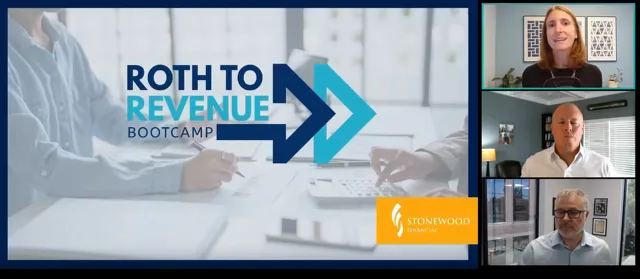
Watch this complimentary training to learn how leading advisors use retirement tax concerns to create urgency, open Roth conversion conversations, and uncover valuable new planning opportunities.
Video Training
Create urgency around tax planning
Open more Roth conversion conversations
Uncover new planning opportunities
Turning high-net-worth prospects into clients
Getting a meeting is job number one. Getting the client is job number two.
The first conversation you have with high net worth clients needs to uncover a risk or an approach the client hasn’t seen before.
For example, if the prospect is concerned about rising taxes, a Roth Done Right analysis can illustrate how different Roth conversion patterns may affect lifetime taxes and IRMAA. A Legacy Done Right report can compare how much after-tax income their heirs may keep under different approaches.
Attracting high-net-worth clients is one thing. Keeping them takes ongoing work. Three habits can make a big difference:
High-touch service. Return calls quickly, remember what matters to them, and treat them as people, not account numbers. You’re helping with their lifestyle, their income and their legacy, not just their portfolio.
A coordinated approach. High-net-worth clients often need retirement income planning, tax strategy, insurance and estate coordination. Make sure the pieces fit together, and work with their CPA and attorney rather than around them.
Ongoing education. Keep clients informed about changes in Washington and what they could mean for them. A short update after a major tax bill shows you’re paying attention, and it’s a natural reason to schedule a review.
Grow your high-net-worth practice with Stonewood
Marketing to high-net-worth individuals takes the right message, the right channels and a client experience that earns referrals. Taxes and legacy are the messages that tend to resonate. Referrals, events, books and LinkedIn are channels that tend to reach them. And showing prospects their own numbers is what turns interest into a conversation.
High-net-worth individuals are generally people with $1 million or more in liquid financial assets, not counting their primary home. Industry research often splits wealthier groups further into very-high-net-worth and ultra-high-net-worth tiers.1
How do financial advisors market to high-net-worth individuals?
Many advisors focus on referrals, centers of influence like CPAs and attorneys, small exclusive events, LinkedIn, books and personalized email. The message that tends to resonate is specific: what taxes and rule changes could mean for the prospect’s own retirement and legacy.
What marketing messages resonate with high-net-worth clients?
Taxes, legacy and legislative risk tend to draw strong interest. Messages work better when they’re personal, such as showing a prospect an estimate of their own retirement tax bill instead of talking about taxes in general.
Where can advisors advertise to high-net-worth individuals?
Options include LinkedIn ads targeted by job title and seniority, direct mail to selected neighborhoods, local business publications, radio and sponsored community events. Pair any ad with an offer of real value, and check with compliance before launching.
How is marketing to ultra-high-net-worth individuals different?
Ultra-high-net-worth families, generally those with $30 million or more, often work with family offices and teams of specialists.1 Reaching them usually runs through professional networks and referrals rather than advertising.
How Stonewood Advisors Stay Ahead of the Next Planning Conversation.
Watch a recent Stonewood Study Group focused on the legacy planning conversation. You’ll see how Stonewood helps advisors break down timely planning topics, client conversation angles, and practical strategies you can put to use immediately.
Expert insights. Real strategies.
Study Group Replay
Timely planning topics
Real client conversation angles
Practical strategies you can use
Real Advisors. Real Results.
See how advisors are using Stonewood software to win larger cases and deliver better
outcomes for their clients.
An advisor was working with a prospect who was a real "do-it-yourselfer" when it came to Roth conversions.
The client was converting assets up their existing tax bracket – and hadn't considered any impact to
IRMAA.
With Roth Done Right, the advisor was able to show an alternate pattern that sped up the conversion to
6 years. The new structure offered $30,000 savings in conversion taxes – a 20% reduction on the
prospect's conversion tax bill. The report also showed hundreds of thousands of dollars in long-term
tax and IRMAA savings from the converted assets – an amount the prospect hadn't been able to quantify
on his own.
Outcome
A new client with $1M in new AUM, and a $1M FIA sale to fund the conversion process.
An advisor was working with a prospect who already had assets with Ken Fisher. Fisher's team presented a
5% systematic withdrawal projection, so the advisor needed a stronger way to frame the income
conversation.
Using the Annuity Alpha report, the advisor showed how an annuity could deliver over 8% in annual cash
flow with lifetime income, plus a long-term care doubler. The contrast was clear enough that the prospect
moved forward.
Outcome
$1.5M placed and a $100K in new business revenue.
An advisor was working with a 58-year-old couple with an established, well-funded retirement income plan,
leaving an additional $3M IRA to build out a legacy for the kids. The couple's existing advisor had no
real additional plan for this money, other than to keep it in their managed account and grow that money as
much as possible for the kids.
Using the Legacy Done Right report, the advisor showed the need for tax planning on this $3M IRA.
According to the advisor, the simple analysis "opened up the wallet" to the Roth conversion story. The
advisor then used the blended Roth/Life feature in the report to show a blend of Roth Conversion assets
with some Life Insurance to help maximize the client’s legacy.
Outcome
$3M in motion. The advisor picked up a $1.5M FIA sale that will be converted to Roth. And the advisor
also sold a 5-Pay Protection focused IUL policy at $225,000 of premium per year.
An advisor group incorporated the Total Tax Burden report into the strategy presentation for all new
prospects. They ran the tax snapshot for every new client as part of their first meeting conversation,
quantifying the growing tax burden of IRA money – and illustrating the kinds of tax savings possible
when working with their firm.
Starting in January of 2023, this simple analysis was presented to every single prospect who walked in
the door. The goal was to differentiate their practice and drive overall revenue growth through various
Roth conversion strategies.
Outcome
From 2022 to 2025, new annual AUM rose from $5M to $50M. Annual FIA sales rose from $3M to $35M.
And annual life premium rose from $50K to $1M.
8 Ways to Turn a Book Into a Lead-Generation Machine
Discover how advisors can use books to warm up cold prospects, create more meaningful follow-up, boost event conversions, and open stronger retirement planning conversations.
Your guide is on its way
Check your inbox for 8 Ways to Turn a Book Into a Lead-Generation Machine. If it isn't there in a few minutes, look in your spam or promotions folder.
Turn books into conversations
Build trust before the first meeting
Create a stronger advisor follow-up system
Close More Business with Stonewood Reports
Easy to run. Easy to present. Pick the report that fits your next client conversation and we'll send a sample to your inbox immediately.
Pick a report. We'll email a sample instantly.
Roth Done RightTax & IRMAA Analysis
Annuity AlphaFIA vs. Managed Account
Legacy Done RightLife Insurance Analysis
Total Tax BurdenRetirement Tax Snapshot
Real insights Practical strategies Easy to present.