The Complete Growth Platform for Independent Advisors — Unlimited Reports, Lead Gen, Support, Training & More|
Trusted by 8,000+ Advisors with 214,000+ Reports Generated
|See Stonewood in Action|
The Complete Growth Platform for Independent Advisors — Unlimited Reports, Lead Gen, Support, Training & More|
Trusted by 8,000+ Advisors with 214,000+ Reports Generated
|See Stonewood in Action|
Independent financial advisors who consistently generate 20 or more qualified leads each month don’t rely on a single channel. They use multiple lead generation strategies simultaneously – and double down on the ones that are delivering at that moment.
This approach hedges risk and creates multiple entry points to find prospects – and for prospects to find you.
Whether you’ve been focusing on group marketing (through seminars and webinars), digital presence (through SEO, LinkedIn, and paid ads), or email marketing and lead funnels, there’s value to blending strategies and reinforcing lead tactics. Here is the complete list of marketing tools for financial advisors
We’ve analyzed the lead generation approach of over 8,000 advisors we’ve trained, and the pattern is clear: advisors who win use a diversified lead generation stack.
Financial Advisor Lead Generation: Quick Answers
What is lead generation for financial advisors?
For financial advisors, lead generation is the process of finding, attracting, and qualifying prospects who are able and want to work with an advisor. For independent advisers, this usually involves a blend of referral networks, educational events, digital marketing channels and lead capture systems that provide a pipeline of qualified prospects ready to have a planning conversation.
How do financial advisors generate leads?
Financial advisors use a range of channels to generate leads such as client referrals, dinner seminars and webinars, content marketing and SEO, LinkedIn outreach, paid advertising (Google and Meta), CPA and attorney partnerships, and lead generation platforms. According to a 2024 survey by Broadridge, advisors with a defined marketing plan generate 168% more leads a month than those without one (Broadridge, 2024 Financial Advisor Marketing Trends Report).
How much does lead generation cost for financial advisors?
Costs vary widely by channel. Client referrals and COI partnerships cost very little, outside of maintaining the relationship. Google Ads financial keywords are usually $15 to $50 per click. Facebook and Meta ads are $2 to $8 per click. Third-party lead services can cost $100 to over $300 per lead depending on the qualification.
What is the best lead generation strategy for independent advisors?
No single strategy wins on its own. A 2024 Kitces survey of nearly 1,000 advisory practices found that client referrals scored highest for both lead quantity and lead quality (Kitces Research, 2024). However, top-performing advisors typically combine 2 to 3 channels (for example, seminars plus SEO plus referrals) and concentrate on a defined niche so every channel reinforces the same audience.
How many leads does a financial advisor need per month?
That depends on your close rate and your growth target. If you close 10% to 20% of your leads, and you want to add 10 to 15 new clients per year, you need about 80 to 150 leads per year, or 7 to 13 per month. Specialist advisors who pre-qualify their leads in a niche usually need fewer leads overall because the conversion rate is higher. Quality counts more than quantity.
What is a good conversion rate for financial advisor leads?
Conversion rates vary by source. CPA and attorney referrals might convert at 60% to 80%. Client referrals could convert at 40% to 60%. Seminar attendees may convert at 10% to 25% depending on topic fit. Inbound digital leads (SEO, content) could convert at 5% to 15%. Purchased lead lists and cold outreach are lower converters at around 1% to 3%. Tracking conversion by source helps you spend more on what works and cut what does not.
Why Most Advisor Lead Generation Fails
Before we get into the 4 strategies that actually work, let’s talk about why so many advisors struggle with lead generation. Three mistakes kill most lead gen attempts:
Mistake #1: Betting Everything on One Channel
You discover dinner seminars work, and you go all-in. You commit to four seminars a month, every month, to fill your pipeline. During slow seasons, the ROI disappoints, and you stop seeing results. Now, you’re left without leads while you wait for seminar season to pick up again.
This is a common marketing trap advisors fall into. Most channels have seasonal variations. Platforms have algorithm changes. Lists get stale. Advisors who rely on a single channel are vulnerable to collapse if that channel underperforms.
Mistake #2: Buying Stale Lead Lists Without Nurturing
You pay $3,000 for a list of 500 ‘qualified’ financial services leads. You call them cold. Most have already spoken to three other advisors. The response rate falls below 2%. You chalk it up to ‘bad leads’ and never follow up. The real problem: Cold lists without a nurture sequence are unlikely to work. It takes time and effort to convert a lead into a true prospect. Advisors who fail to nurture often fail to find success.
Mistake #3: Lacking a System for Following Up
You get a lead from a seminar attendee list. You send an email. You make a call. They don’t respond. You move on. Advisors often fail to incorporate new leads into a system that continually touches the prospect until they are ready to meet.
Why Defining Your Niche Comes Before Picking a Channel
Here is a pattern that shows up over and over when we talk to advisors struggling with lead gen: they pick channels before they pick an audience. They run Facebook ads to “everyone 50 and older.” They write blog posts about “retirement planning” for no one in particular. And then they wonder why the leads feel lukewarm.
Advisors who focus on a specific niche, whether that is business owners approaching a sale, federal employees navigating FERS retirement, physicians managing student debt alongside high income, or widowed retirees handling finances alone for the first time, tend to outperform generalists on conversion and on cost per lead. The reason is straightforward: when every piece of your marketing speaks to one audience, the right prospects self-select in and the wrong ones filter out before you spend time on them.
Niching down also compresses your marketing budget. One landing page, one seminar topic, one LinkedIn content calendar, one ad set. You are not splitting attention across five different prospect profiles. You are deepening relevance for one.
If you are not sure where to start, look at your best 10 clients. What do they have in common? Industry, age range, asset level, life stage, planning concern? That overlap is usually your niche. Pick it, name it in your messaging, and then apply the channel strategies below with that audience in mind.
Free Advisor Training
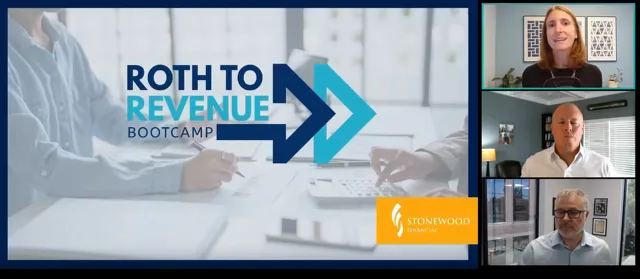
Turn Roth Conversations Into Revenue
Watch this complimentary training to learn how leading advisors use retirement tax concerns to create urgency, open Roth conversion conversations, and uncover valuable new planning opportunities.
Video Training
Create urgency around tax planning
Open more Roth conversion conversations
Uncover new planning opportunities
How to Make your Lead Gen a Success
What Makes a Lead Worth Pursuing
Some names on a list are not worth your time as leads. Before we get into channels, it helps to define what a “qualified lead” actually looks like for your practice. Most advisors who struggle with lead gen aren’t getting too few leads. They’re generating the wrong kind of leads and spending hours chasing prospects who will never convert.
A qualified lead for an independent financial advisor usually has three boxes checked. First, financial capacity. Does the prospect have sufficient assets, income or planning complexity to benefit from working with you? Timing is second: the prospect is in a situation that requires urgency, whether it’s an imminent retirement, an inheritance, a business sale or a tax event. Third, intent. The prospect is actively looking for help or has been referred to you by someone they trust.
Advisors who use a simple lead scoring method (rank leads by capacity, timing and intent on a 1 to 3 scale) can prioritize follow-up and avoid the pitfall of treating every inbound form fill the same way. A lead who attended your Roth conversion webinar and asked a question about their unique situation is a different prospect than someone who downloaded a general retirement checklist. Your follow-up cadence should align with that difference.
Before you start a new channel, what does qualified mean to your practice? And that definition drives everything else: which channels to invest in, what content to create and how aggressively to follow up.
From talking to successful advisors coast-to-coast, here are the four lead gen approaches that are converting today:
Approach #1: Educational Group Marketing
Education has long been one of the highest-converting lead sources for financial advisors, because it builds trust before the sales conversation. When prospects attend your webinar or seminar, they’re pre-qualified as interested in the concerns you address. Many advisors find group marketing events produce higher-quality leads than cold outreach and in-bound efforts.
Dinner Seminars (The Still-Reigning Champion)
Dinner seminars remain the top lead generation channel for many independent financial advisors, especially advisors over 50. The format has stayed relatively constant as well: rent a private dining room at a nice restaurant, invite prospects, deliver a 45-minute presentation on a relevant topic, and book appointments.
Some of the top dinner seminars that are working today? Taxes, taxes, taxes. Income planning and Social Security. Estate planning and legacy topics. (You can view some of Stonewood’s most popular consumer seminars presentations here.)
The seminar still works because it does something digital channels can’t: it removes friction. It’s easy for your prospect to book an appointment with you. They’ve met you in person, they understand the value of your advice, and they’re often ready to meet right now.
Webinars and Virtual Events
Webinars have endless flexibility – and one recording can be used in multiple marketing channels.
If you think you have to be in your office on your computer at a specific time to present on a webinar, you’re mistaken. Today, automated webinars reign.
You pre-record a 45-minute webinar on a specific topic (Roth conversion strategies, annuity income planning, estate planning). You pick a time and date (or times and dates) for your webinar to run. You promote it to your email lists and via social media or digital ads. You collect registration information, and attendees book appointments from the event.
But wait! There’s more.
Your recording can also be used as an on-demand webinar (with lead capture) on your website, social media, or email marketing. And you don’t even have to make the recording yourself.
Webinar conversion rates are lower than dinner seminars (typically 5-10% of attendees book appointments) because the barrier to entry is lower. It’s easy to register, and low-risk to attend.
But the cost is also dramatically lower. A webinar costs you platform fees ($100-300/month for a decent platform) and promotion costs ($200-$1,000 in ads to fill 50-100 seats).
Webinars are great for building your email list and warming up cold prospects. Not every attendee books an appointment, but every attendee is a new contact for your outreach and nurture sequences.
Large-Scale Tax Summits
Looking for an event that can drive new leads, nurture existing prospects, and even increase wallet-share from existing clients? Try a Tax Summit.
A dinner seminar alternative, tax summits (or large-scale events around any given topic) are increasing in popularity, especially for larger practices.
Here’s how it can work: You rent a hotel ballroom, community center or other venue that can hold 80-200 people. You invite A-list clients, warm prospects who didn’t convert from other marketing approaches, anyone on your email list – you can even mail to the event. Rather than a complete dinner, most Summits offer coffee, tea, soda, and maybe some light snacks.
The power of these events is they can be used to accomplish multiple marketing goals: Cold leads are introduced to your practice. Warm leads are likely to book meetings. Existing clients want to discuss new strategies with you. All from one event.
Approach#2: Digital Lead Generation
Digital channels have grown in popularity thanks to one key feature. They are scalable. One blog post can generate leads for years. One ad campaign can run continuously. Digital lead gen requires less manual effort than in-person events – but it takes time to set up and requires consistent management. Advisors who use it successfully can see big results.
Free Tools and Calculators
The value prop in digital marketing is often immediate: Click this link, get this report. Fill out this form, immediately read a valuable book.
Free financial tools and calculators are among the highest-converting lead magnets for advisors because they’re genuinely useful. Your prospect gets immediate value. You get their contact information and permission to follow up.
Here at Stonewood, we created two tools specifically for this purpose:
Our Retirement Tax Bill Roth Conversion Calculator quickly gives your prospects a snapshot of what their retirement taxes could be – and how much they could save by working with you. After sharing a few pieces of information, they get a custom Retirement Tax Bill report – and you get their contact information as a lead.
Another powerful offer is a digital book. Topic-specific books intended to be read in less than 60 minutes make great offers. Your prospect fills out a form and immediately gets access to a digital book educating them on Roth conversions, potential legislative changes, income strategies and more. In fact, this is one of the key ways advisors are using Stonewood’s newest book, The Road less Taxed.
Other calculators working well for independent advisors right now? RMD calculators, retirement income projectors, and Social Security analyses. Each tool can live on your website, be promoted in your email nurture funnels, and appear in your paid ad campaigns.
SEO and Content Marketing
This is the long-game lead generation strategy (and happens to be my personal favorite).
You create blog content targeting keywords your prospects search for (like this article you’re reading right now!). You craft the content to rank in Google, and drive organic traffic to your website. Prospects find you when they’re actively searching for financial solutions – making them highly-qualified leads.
For independent financial advisors, the keywords that drive the most value turn out to be tactical ones: ‘Roth conversion rules 2026,’ ‘how to reduce taxes in retirement,’ ‘required minimum distributions explained,’ ‘backdoor Roth strategies,’ ‘annuity income calculator.’ These keywords have 1,500-4,000 monthly searches and an audience actively seeking solutions.
The compounding effect of SEO is powerful. A blog post you write today can drive leads for two years. (Right now, Stonewood’s most effective content is a blog post I wrote two years ago!)
After 12 months of consistent content creation, your organic traffic accelerates. Most advisors see meaningful traffic within 6-8 months if they publish two blog posts per month targeting relevant keywords.
SEO does require patience and consistency. It’s not a quick-win channel. But it’s durable. Once you own a keyword position, ads stop running and the leads keep coming. And if you need help with content to promote, Stonewood has you covered. We’ve created dozens of brochures and handouts to help you generate traffic effectively.
Your Website Is Your Highest-Converting Lead Channel
Every lead generation strategy in this article eventually drives a prospect to your website. If the site does not convert visitors into leads, you are paying to fill a leaky bucket.
Three things separate high-converting advisor websites from average ones. First, landing pages built for specific audiences, not a generic “contact us” form. A prospect who clicked on your Google Ad for “Roth conversion help” should land on a page about Roth conversions, not your homepage. Niche-specific landing pages convert at 5% to 10%, while generic pages typically convert at 1% to 2%. Second, clear calls to action on every page: schedule a call, request a report, register for a webinar. If your prospect has to hunt for the next step, many of them will leave. Third, lead magnets gated behind simple forms. Ask for a name and email, not a full financial profile. The fewer fields on the form, the higher the completion rate.
Test your website on mobile. Many advisors design for desktop, but a growing share of prospects browse on their phones, especially after seeing a social media post or ad. If the page loads slowly or the form is hard to tap, you lose the lead before the conversation starts.
LinkedIn Outreach and Personal Branding
Increasingly, LinkedIn is where high-net-worth prospects research financial advisors. The platform works in two modes: inbound (people find you because of your content) and outbound (you find prospects and reach out).
For outbound LinkedIn, the process is simple: identify your ideal prospect profile (age 45-65, high income, relevant professional background), search for them, view their profile, send a personalized connection request, and follow up with a value-first message. You’re not asking for a meeting on the first message. You’re adding value. You’re commenting on their posts. You’re sharing insights relevant to their business. You’re offering them a complimentary book (one of the most effective LinkedIn touch points!)
After 5-7 touches, you ask for a call.
Inbound works differently. You post financial content regularly (2-3 times per week). Prospects start following you, reading your insights, and reaching out to you directly. They come pre-warmed because they’ve been following your content for weeks. Your conversion rate on inbound LinkedIn leads is typically 30-50% because the prospect already knows your philosophy and trusts your expertise.
LinkedIn works best when combined with email. If you can capture your LinkedIn followers’ email addresses or get them to convert on a lead-capture form for one of your offers, you can add them to your nurture sequence and continue building the relationship off the platform.
Video and Short-Form Content
Video is growing fast as a trust-building channel for financial advisors. Short clips on LinkedIn, YouTube Shorts, and Instagram Reels give prospects a feel for your personality and expertise before they ever pick up the phone. A 60-second explanation of how IRMAA brackets work or what a Roth conversion ladder looks like can do more for credibility than a 2,000-word blog post, because the prospect sees and hears you.
You do not need a production studio. A smartphone, decent lighting, and a quiet room are enough. Record short answers to the questions your prospects ask most often in meetings. Post them consistently (2 to 3 times per week on LinkedIn, weekly on YouTube) and repurpose webinar recordings into 1 to 2 minute clips for social media.
Video also compounds. A YouTube video you record today can generate views and inbound calls for years, much like a blog post. And when a prospect watches your video and then books a meeting, they arrive already feeling like they know you. That shortens the sales cycle and raises your close rate.
Google Ads for High-Intent Keywords
Google Ads put your website in front of prospects at the moment they’re searching for solutions. When someone searches ‘financial advisor near me’ or ‘Roth conversion help,’ you appear at the top with an ad.
Google Ads for financial advisor keywords typically cost $15-50 per click. If your average conversion rate is 2-5% (meaning 2-5 clicks result in an appointment), your cost per appointment is $300-$2,500. This is higher than organic search or referrals, but the leads are hot. The prospect is actively searching. They’re ready to talk.
Google Ads work best when combined with a solid landing page and a defined follow-up sequence. A generic landing page will likely convert at 1-2%. A landing page optimized for the specific keyword (e.g., a page entirely about Roth conversions for your target demographic) can convert at 5-10%.
Facebook and Meta Ads for Event Registration
Facebook and Instagram ads are proving to be a powerful way to drive event registration. You create an ad promoting your upcoming webinar or dinner seminar, target your ideal prospect demographic (age, income, interests, location), and collect registrations.
Meta Ads typically cost $2-8 per click, making them much cheaper than Google Ads. The tradeoff: you’re targeting an audience that’s not actively searching out financial content (browsing Facebook at 8pm) rather than an audience actively searching for solutions (Google at 2pm). The conversion rate is lower, but the cost is also much lower.
Meta Ads work exceptionally well for seminar registrations, webinar invitations, and lead magnet offers (free book, calculator access, guide download). They also allow for retargeting: show ads to people who visited your website but didn’t register, encouraging them to engage with another offer.
Lead Generation Tools and Platforms Worth Knowing
In addition to individual channel tactics, a growing set of tools and platforms can help advisors manage, automate and scale their lead generation. These fall into four main buckets:
Lead directories and matching platforms. Services like SmartAsset AMP, WiserAdvisor, and NAPFA’s directory connect advisors with consumers actively searching for financial advice. You pay per lead or per validated inquiry. The quality varies, so track your cost per appointment and close rate by source before scaling spend.
CRM and nurture systems. Advisor-specific CRMs, such as Wealthbox and Redtail, connect to custodians and monitor client interactions centrally. To create drip sequences that nurture leads without requiring human intervention, use email automation tools like ActiveCampaign or HubSpot.
Content and marketing automation. Platforms like FMG Suite and Snappy Kraken offer pre-built, compliance-reviewed content (blog articles, email campaigns, social media postings) and publishing automation. These save time for advisers who want to have a content presence but don’t have to write from fresh every week.
AI matching and prospecting. Newer platforms use AI to match advisors with prospects based on fit (assets, planning needs, geography) or to surface leads based on wealth events and intent signals. This category is evolving quickly, so evaluate each tool on compliance fit, CRM integration, and whether the data actually maps to your niche.
No single tool replaces a strategy. The advisors getting the best results pick one tool from each category they need, connect them together, and then measure which combination drives the lowest cost per new client.
How AI Is Changing Financial Advisor Lead Generation
AI tools are showing up across every stage of the advisor lead generation process, from prospecting to follow-up. The technology is moving fast, but the practical applications that are working today fall into a few clear categories.
Wealth event monitoring. Some AI platforms track publicly available data (business sales, real estate transactions, executive promotions, equity distributions, inheritance filings) and alert advisors when a prospect in their target niche experiences a financial event. This shifts prospecting from a fixed schedule (“call 20 people today”) to an event-triggered approach (“this business owner just closed a sale and may need rollover advice”). The timing signal often matters more than the channel.
AI-powered lead scoring and enrichment. Rather than treating every form fill the same way, AI can append data to an inbound lead (estimated net worth, household composition, professional history) and score it before you pick up the phone. Advisors who add an enrichment step to their inbound workflow often report higher conversion rates because they arrive at the first call with context instead of cold questions.
Automated content and email drafting. AI writing tools can draft blog posts, social media updates, and email nurture sequences, but they require careful review. Financial content must be fact-checked, compliance-reviewed, and edited for tone before publishing. AI is a first-draft accelerator, not a finished-product machine.
CRM intelligence. Many CRMs now include AI features that flag stale leads, suggest follow-up timing, draft personalized emails, and identify which contacts are most likely to convert. These features reduce manual tracking and help smaller teams act on their pipeline more consistently.
A compliance note on AI outreach. FINRA and SEC rules apply to AI-generated communications the same way they apply to anything you write yourself. Automated outreach to unknown individuals carries regulatory risk, especially for registered advisors. Any AI tool that automates prospect-facing messages should be reviewed by compliance before deployment. The safest applications of AI today are internal (lead scoring, data enrichment, content drafting) rather than external (automated cold outreach).
Referral and Center-of-Influence Lead Generation
Every week, I talk to advisors who are growing their practices primarily off referrals. There’s a reason referral marketing has some of the highest conversion rates in our industry: someone the prospect already trusts has endorsed you. Your referral partner can be happy clients, or more formal centers-of-influence (COI) like CPAs and estate planning attorneys in your area.
Book Marketing (The Road Less Taxed Model)
You’ve probably seen other advisors do this: they write a book, buy 500 copies, and use them as lead magnets through events, referral partner mailings, and first meetings with prospects.
The book builds authority, and turns readers into leads when they call to discuss what they learned.
Not every advisor wants to write a book, and not every book makes for a good lead magnet. In January 2026, my colleague and I published The Road Less Taxed for advisors to use in their lead gen efforts. (There’s even the option to customize the book with your foreword, bio and photo on the book.)
The book approach works because it’s tangible. A book in your hand feels like an asset. And a book written specifically to help generate leads to your practice will leave a reader with questions they need YOU to answer.
Free Advisor Guide
8 Ways to Turn a Book Into a Lead-Generation Machine
Download 8 Ways to Drive Leads with Books and discover how advisors can use books to warm up cold prospects, create more meaningful follow-up, boost event conversions, and open stronger retirement planning conversations
Get the Free Guide
CPA Partnerships and Mutual Referral Systems
CPAs and financial advisors serve the same clients but provide different services – the CPAs work on micro-tax levels, reducing taxes this year. Independent advisors work on a macro-tax level, reducing lifetime taxes in retirement.
CPAs make great referral partners because the relationship is a two-way street: The CPA refers clients to you to implement tax strategies like Roth IRAs and life insurance policies. You refer clients back to the CPA for tax-filing.
Building CPA partnerships takes time – and lots of coffee dates and meetings. But there are ways to enhance your value to your CPA partners: Offer to send quarterly retirement insights they can share with their clients. Host a webinar with them on tax-efficient retirement income strategies. Find clients you have in common and use them as a bridge into the relationships.
⚡ CPA Partnership Economics: $0 cost to build | 5-10 referrals/year per CPA | 60-80% close rate on CPA referrals | Value per referral: $25,000-75,000 in client lifetime value
Estate Attorney Referral Partnerships
Estate attorneys serve affluent clients planning wealth transfer – trusts, wills and more. Where some are looking for assistance? Retirement income planning and tax optimization that fit seamlessly into the estate plans they’re developing.
Unlike CPAs (who might partner with multiple financial advisors), many estate attorneys focus on one or two trusted advisors for referrals. Getting to be that trusted advisor means consistent outreach, education, and value-sharing.
Client Referral Programs
Your existing clients are your best marketers. They’ve experienced your advice, seen results, and trust you. When good advisors ask for introductions to similar prospects, the response rate tends to be high – especially if you can give your clients something special to offer their friends.
There’s a traditional approach that still delivers: create a systematic ask, where at the end of each successful client project (after you implement a Roth conversion, close an annuity sale, complete estate planning work), you ask the client for three introductions. Make the ask specific: ‘Who do you know who might benefit from a Roth analysis similar to what we did for you?’ Don’t rely on passive referral buttons on your website. Ask directly.
Many advisors are also implementing a value-add approach, where several times a year they provide their clients with an “offer” to share with their friends. These offers can be many of the tools you’re already using in your marketing outreach: a complimentary webinar or event (see the tax summit section above). A complimentary book (see The Road Less Taxed above). A complimentary Social Security analysis, or tax analysis.
Track your referral conversions carefully. Many advisors aim for 10% of client referrals to turn into meetings, and 40% of those meetings to turn into clients.
Online Reviews and Testimonials Build Trust Before the First Call
Before a prospect calls you, there is a strong chance they looked you up online. According to industry surveys, roughly three out of four consumers search for a company’s online presence before making contact. For financial advisors, Google reviews and third-party profile ratings have become a trust filter that operates before your referral partner’s endorsement even reaches the prospect.
The SEC’s Marketing Rule (Rule 206(4)-1), updated in 2022, now permits advisors to use client testimonials and endorsements in marketing, provided they include required disclosures. This opened a door that was closed for decades. Advisors can now ask satisfied clients for Google reviews, feature testimonials on their website, and include client quotes in marketing materials, as long as each testimonial carries the appropriate disclosure language.
Make the ask part of your process. After a successful plan implementation, a Roth conversion, or a positive annual review, ask the client if they would be willing to leave a short Google review. Most will say yes if you make it easy. Send them a direct link to your Google Business Profile review page. Even 10 to 15 genuine reviews can significantly improve your local search visibility and give cold prospects a reason to trust you before the first meeting.
The Lead Generation Stack: How Top Advisors Combine Strategies
As I mentioned at the start of this article, lead gen strategies tend to work best in combination.
And that’s because lead gen strategies can build on each other. (A seminar attendee who didn’t book an appointment becomes a lead for a digital book campaign. Someone who fills out a tax calculator on your website can be invited to a webinar.)
Of course, a solo advisor has a different marketing capacity than a team with dedicated marketing staff. So let’s look at realistic marketing stacks for different practice sizes.
Solo Advisor Stack (1 person)
Focus: Education + SEO + Referrals. You have limited time. Choose channels that scale without requiring constant manual effort.
Example: Dinner seminars quarterly (8 per year) + monthly blog posts (SEO) + systematic client referral asks + one CPA/attorney partnership + LinkedIn content 2x per week
Lead generation capacity: 10-20 leads per month
Small Team Stack (advisor + assistant)
Focus: Education + Digital + Referrals. With help, you can add paid channels and more complex nurture sequences.
Focus: Diversified channels across all four categories. You can invest in paid ads, hire a marketing person, and run multiple programs simultaneously.
Example: Monthly webinars + 2 dinner seminars per month + weekly blog posts + Google Ads ($1,500/month) + Facebook/Meta ads ($500/month) + 3-4 CPA/attorney partnerships + full email nurture + LinkedIn with 2 advisors + content marketing calendar + podcast outreach + community involvement + lead aggregator subscriptions
Lead generation capacity: 50-100+ leads per month
Your Got Questions? We’ve Got Answers.
Q: How many leads do I need to generate to get one new client?
It depends on your sales process and target market. For most independent advisors working with clients ages 45-65, it takes 10-15 quality leads to generate an immediate appointment.
Multiply this by your appointment-to-client close ratio, and you can see the number of leads you need to generate each month. Remember: the 10-15 leads are engaged leads, meaning they could be new leads or leads reengaged from one of your other lists or strategies.
Q: Should I focus on one channel or multiple channels?
For most advisors, the answer is multiple channels. Advisors who rely on a single channel are vulnerable when that channel underperforms. The best advisors use 3-4 channels simultaneously, investing extra in strategies that are performing in that month, quarter or year.
Q: Are cold email and cold calling still viable?
Not as primary channels. Cold email without a relationship gets 1-3% response rates. Cold calling gets 0.5-1% appointment rates. These channels only work if you’re calling into warm leads (referrals, people who visited your website, past leads who didn’t convert).
Q: How do I know which strategy to pick first?
Pick based on three criteria: (1) Your comfort level. If you hate public speaking, don’t start with seminars. (2) Your available resources. If you have no marketing budget, start with free channels like LinkedIn and referrals. (3) Your timeline. If you need leads in the next month, run a webinar or paid ads. If you can wait 6 months, start an SEO program.
Q: Can I automate lead follow-up?
Yes, and this is a practice I see time and time again for today’s top independent advisors.
Leverage email sequences to warm and convert your leads. Once a lead comes in (from webinar, calculator, seminar, or ad), put them into an automated nurture sequence. Most advisors see best results with 7-10 touch sequence over 21-30 days. After 30 days, move the lead to monthly newsletter or segment by fit (warm leads get personal outreach; cold leads go to general nurture). Automation is essential for scaling.
Q: What’s the biggest mistake advisors make with lead generation?
Not following up. Advisors generate leads but abandon the follow-up sequence after two emails.
Cold prospects often need 7-10 touches before they book a call. A best practice is to build a 30-day nurture sequence (for example, email, phone, mail, email, phone) and stick to it. Most of your conversions come from touches 4-7, not touches 1-2.
Q: What are the best lead generation tools for independent financial advisors?
Advisors have several categories of tools that can help them generate and manage leads. Consumer-oriented directories such as SmartAsset AMP, NAPFA, and WiserAdvisor will match you with consumers who are looking for advisors. Your pipeline is managed in advisor-specific CRMs (Wealthbox, Redtail). Content platforms (FMG Suite, Snappy Kraken) automate publishing to blog, email and social media. AI prospecting tools find leads based on wealth events and intent signals. The right stack will depend on the size of your practice and your budget.
Q: How do I define my niche as a financial advisor?
Look at your top 10 current clients and see if you can find a commonality: Industry, age range, asset level, life stage or planning concern. That overlap is typically your sweet spot. Examples would include business owners contemplating a sale, federal workers strategizing for FERS retirement, physicians juggling student debt and substantial income, or retirees who have recently been widowed. When you have a defined niche, every marketing channel becomes more effective because your message is resonating with a specific audience.
Q: How long does it take for SEO to generate leads for a financial advisor?
Most advisors will begin to see meaningful organic traffic within 6 to 8 months of consistent content creation, assuming they are publishing at least two blog posts a month, and targeting relevant keywords. SEO is a long-term game. The power of compounding means that a blog post you write today can be generating leads 2+ years later. Many advisors looking for quicker wins pair SEO with Google Ads, capturing high-intent traffic while their organic presence grows.
Q: Should financial advisors use AI for lead generation?
Artificial intelligence can help at multiple points: scoring and enriching inbound leads, monitoring wealth events for outreach timing, creating content and email sequences, and surfacing pipeline activity in your CRM. The safest uses today are internal (lead scoring, content drafting, data enrichment) and not external (automated cold outreach) because FINRA and SEC rules apply to AI-generated prospect communications the same way they apply to anything you write yourself.
Compliance Guardrails Every Advisor Should Know
Lead generation for financial advisors operates inside a regulatory framework that does not apply to most other industries. Here are the key guardrails, along with state-by-state regualtions:
SEC Marketing Rule (Rule 206(4)-1). Updated in 2022, this rule governs how RIAs are able to use testimonials, endorsements, third-party ratings, and performance advertising. client testimonials and endorsements can be relied upon but each must include required disclosures (e.g., whether compensation was provided, material conflicts of interest, and other specified information). Before you run any campaign that includes client quotes or case studies, run the rule by your compliance team.
FINRA communications rules. All communications with the public from broker-dealer affiliated advisors, such as social media posts, blog articles, advertisements, and AI-generated material, are governed by FINRA’s rules. All communications must be fair, balanced and not misleading. Specific claims about results or performance require appropriate context and disclaimers.
Referral fee disclosure. If you pay for referrals (whether to a client, a CPA partner, or a lead generation service), disclosure is required. The prospect must know that a financial arrangement exists. Skipping this step creates a compliance exposure that is easy to avoid.
AI-generated content. Regulators have made clear that AI-generated communications are subject to the same rules as human-written ones. If your AI tool drafts a blog post that makes a misleading claim, you are responsible. Review every AI-generated piece before publishing, and document your review process.
None of this should stop you from marketing. Advisors who build compliance into their workflow from the start avoid problems entirely. The key is to review before you publish, disclose when required, and document your process.
The Single Most Important Metric: Cost Per Lead vs. Client Lifetime Value
Here’s the math that matters: If your average client is worth $10,000 in annual recurring revenue and stays for 10 years, their lifetime value is $100,000. You can afford to spend up to $5,000-10,000 acquiring that client and still make money. Likewise, if your average life or annuity sale generates $10,000 in commission, you can decide what percentage of that revenue to spend acquiring that client.
This is why understanding your lead source cost and your client lifetime value is critical. It tells you exactly how much you can spend on each lead generation channel. If your customer lifetime value is $30,000 (lower-value clients), you can afford less per lead. If it’s $100,000, you can spend more aggressively.
Implementation: Your First 30 Days
Don’t try to implement all these strategies at once. Consider picking one from each section.
Here’s a sample template for your first 30 days:
Week 1: Assessment and Planning
Answer these questions: (1) What is my target client profile? (2) What is my average client lifetime value? (3) How many leads do I need per month? (4) What channels am I currently using? (5) Which three channels will I add or improve?
Week 2-3: Channel Implementation
If you choose dinner seminars: book a restaurant, send invitations, create a presentation (or download a pre-created one from Stonewood). If you choose webinars: choose a platform, set a date, create a landing page. If you choose SEO: pick your target keyword, outline your first three blog posts.
Week 4: Lead Capture and Follow-Up Systems
Set up your email nurture sequence. Create a 30-day follow-up series for your new leads.
Create a tracking system to measure conversion rates by source. Your process can be: Lead comes in → Added to email sequence → Manual follow-up at day 7 → Manual follow-up at day 21 → Qualification conversation → Appointment, assignment to long-term nurture list, or disqualification.
Key Takeaways
Looking for the TL/DR? Here you go:
One: Independent advisors who generate 20+ qualified leads per month use multiple channels, not just one. Build a diversified lead generation stack.
Two: Education-based channels (seminars, webinars, content) produce the highest-quality leads and highest close rates. Digital channels are more scalable. Referral channels are the most efficient.
Three: Most lead generation failures happen at follow-up, not acquisition. Build a documented nurture sequence before you launch a new channel.
Four: Track your cost per lead and compare it to your client lifetime value. This single metric tells you whether your lead generation is working.
Five: The best time to start was six months ago. The second-best time is today. Pick one channel and commit to it for 120 days.
What 1,200+ Advisors Already Know
Stonewood marketing resources are being used by more than 1,200 independent advisors across the country. So we’ve seen what works. The advisors who experience the most practice growth share one thing in common: they’re systematic about lead generation. They don’t rely on luck. They build diversified channels. They measure results. They optimize based on data.
If you’re generating fewer than 10 qualified leads per month, you have a lead generation problem. If you’re generating 10-20 leads and not converting them, you have a sales process problem. If you’re generating 20+ leads and not growing, you have a service delivery problem.
Whether you’re generating leads and looking to grow, or just trying to figure out where to start, Stonewood is here to help. Check out some of my favorite tools below – and see what the marketing buzz is all about.
Free Study Group Replay
How Stonewood Advisors Stay Ahead of the Next Planning Conversation.
Watch a recent Stonewood Study Group focused on the legacy planning conversation. You’ll see how Stonewood helps advisors break down timely planning topics, client conversation angles, and practical strategies you can put to use immediately.
Tyler Randall is the National Sales Director at Stonewood Financial. He works with financial advisors across the United States helping them position annuities strategically in retirement plans. Over the past 15 years, he's coached advisors who have written over $400M in annuity premium. His approach focuses on consultative selling, data-driven positioning, and building client confidence through transparency. Tyler is a frequent speaker at industry conferences and webinars.
Real Advisors. Real Results.
See how advisors are using Stonewood software to win larger cases and deliver better
outcomes for their clients.
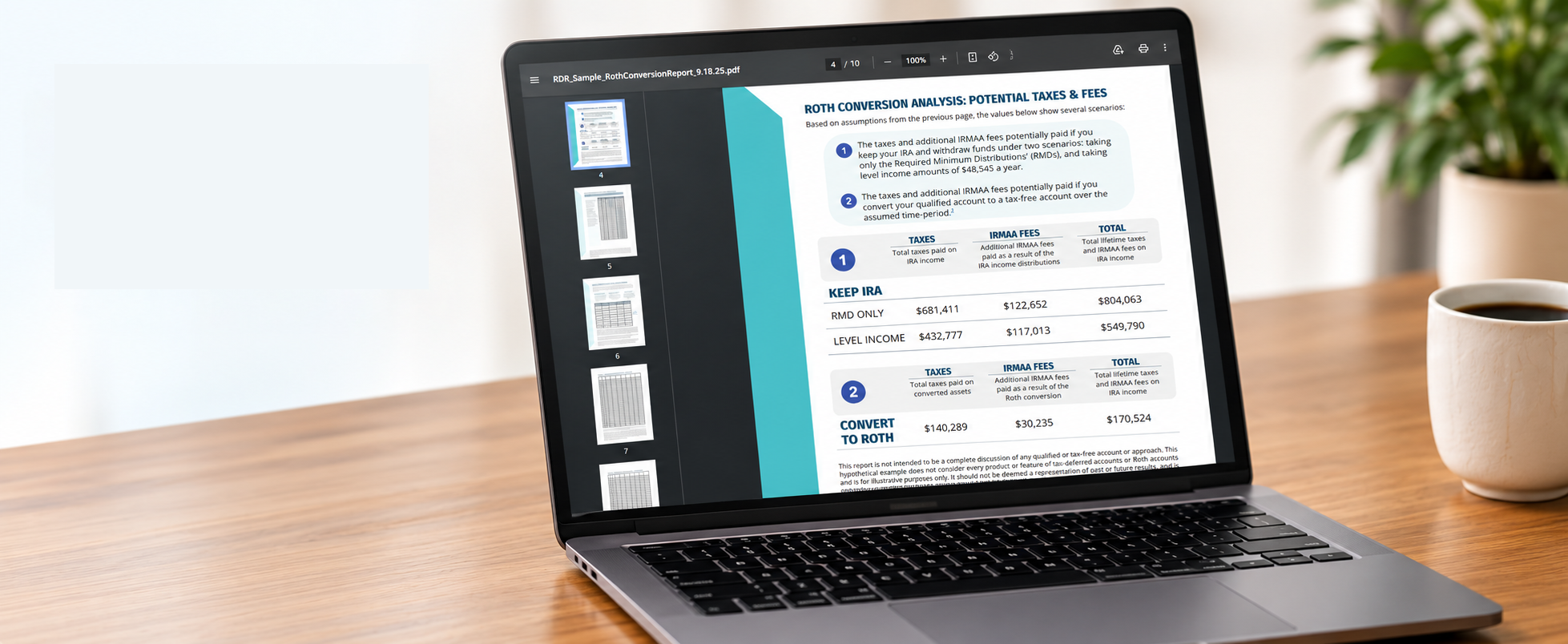
An advisor was working with a prospect who was a real "do-it-yourselfer" when it came to Roth conversions.
The client was converting assets up their existing tax bracket – and hadn't considered any impact to
IRMAA.
With Roth Done Right, the advisor was able to show an alternate pattern that sped up the conversion to
6 years. The new structure offered $30,000 savings in conversion taxes – a 20% reduction on the
prospect's conversion tax bill. The report also showed hundreds of thousands of dollars in long-term
tax and IRMAA savings from the converted assets – an amount the prospect hadn't been able to quantify
on his own.
Outcome
A new client with $1M in new AUM, and a $1M FIA sale to fund the conversion process.
An advisor was working with a prospect who already had assets with Ken Fisher. Fisher's team presented a
5% systematic withdrawal projection, so the advisor needed a stronger way to frame the income
conversation.
Using the Annuity Alpha report, the advisor showed how an annuity could deliver over 8% in annual cash
flow with lifetime income, plus a long-term care doubler. The contrast was clear enough that the prospect
moved forward.
Outcome
$1.5M placed and a $100K in new business revenue.
An advisor was working with a 58-year-old couple with an established, well-funded retirement income plan,
leaving an additional $3M IRA to build out a legacy for the kids. The couple's existing advisor had no
real additional plan for this money, other than to keep it in their managed account and grow that money as
much as possible for the kids.
Using the Legacy Done Right report, the advisor showed the need for tax planning on this $3M IRA.
According to the advisor, the simple analysis "opened up the wallet" to the Roth conversion story. The
advisor then used the blended Roth/Life feature in the report to show a blend of Roth Conversion assets
with some Life Insurance to help maximize the client’s legacy.
Outcome
$3M in motion. The advisor picked up a $1.5M FIA sale that will be converted to Roth. And the advisor
also sold a 5-Pay Protection focused IUL policy at $225,000 of premium per year.
An advisor group incorporated the Total Tax Burden report into the strategy presentation for all new
prospects. They ran the tax snapshot for every new client as part of their first meeting conversation,
quantifying the growing tax burden of IRA money – and illustrating the kinds of tax savings possible
when working with their firm.
Starting in January of 2023, this simple analysis was presented to every single prospect who walked in
the door. The goal was to differentiate their practice and drive overall revenue growth through various
Roth conversion strategies.
Outcome
From 2022 to 2025, new annual AUM rose from $5M to $50M. Annual FIA sales rose from $3M to $35M.
And annual life premium rose from $50K to $1M.
8 Ways to Turn a Book Into a Lead-Generation Machine
Discover how advisors can use books to warm up cold prospects, create more meaningful follow-up, boost event conversions, and open stronger retirement planning conversations.
Your guide is on its way
Check your inbox for 8 Ways to Turn a Book Into a Lead-Generation Machine. If it isn't there in a few minutes, look in your spam or promotions folder.
Turn books into conversations
Build trust before the first meeting
Create a stronger advisor follow-up system
Close More Business with Stonewood Reports
Easy to run. Easy to present. Pick the report that fits your next client conversation and we'll send a sample to your inbox immediately.
Pick a report. We'll email a sample instantly.
Roth Done RightTax & IRMAA Analysis
Annuity AlphaFIA vs. Managed Account
Legacy Done RightLife Insurance Analysis
Total Tax BurdenRetirement Tax Snapshot
Real insights Practical strategies Easy to present.