Quick Answer: How Do You Grow a Financial Advisory Practice? Advisors grow a financial advisory practice by combining a defined niche, a structured referral and lead generation system, a prospect meeting that actually converts, and ongoing training that sharpens the client conversation. Growth stalls when any one of those pieces is missing, not because an advisor lacks technical knowledge. The practices that grow consistently treat these as a connected system rather than a handful of separate tactics.
A referral comes in. The meeting goes well. The prospect says they’ll think about it, and you never hear back.
That moment repeats itself in a lot of independent practices, and it rarely comes down to one obvious mistake. It’s usually a combination of things: nothing to differentiate your advice from the advisor down the street, no repeatable way to ask for referrals, a pipeline that depends on word of mouth, and a prospect meeting that explains a strategy instead of showing it.
Learning how to grow a financial advisory practice means addressing each of those pieces in a coordinated, strategic way. This guide walks through the levers that move the needle: differentiation, referral systems, lead generation, client analysis software, and training that closes the gap between what you know and what you can explain to a client.
Close More Business with Stonewood Reports
Easy to run. Easy to present. Pick the report that fits your next client conversation and we'll send a sample to your inbox immediately.
Roth Done RightTax & IRMAA Analysis
Annuity AlphaFIA vs. Managed Account
Legacy Done RightLife Insurance Analysis
Total Tax BurdenRetirement Tax Snapshot
Why Growth Stalls Even When the Work Is Good
Most advisors who plateau are not short on technical skill. They know the planning concepts. They can run the numbers for a client. What tends to be missing is a system that turns that knowledge into new clients on a predictable basis.
Demand for financial advice is certainly not the problem. Employment for personal financial advisors is projected to grow 10% from 2024 to 2034, a pace the U.S. Bureau of Labor Statistics describes as much faster than the average for all occupations, with roughly 24,100 openings projected each year as advisors retire or change roles.1 That growth means more competition for the same prospects, and more pressure on advisors to differentiate rather than market to everyone.
A few patterns show up again and again in practices that have plateaued. There’s no defined niche, so every prospect conversation starts from scratch. Referrals happen, but only when a client happens to think of it. Lead generation is inconsistent – a seminar here, a LinkedIn post there -, with no system tying it together. And the prospect meeting itself leans on explanation rather than a clear, visual analysis the client can actually follow.
Addressing those three gaps in order tends to produce more durable growth than chasing a single new marketing tactic.
Lever 1: Choose a Niche Worth Owning
Trying to serve everyone rarely works, because a generalist message gives a prospect no reason to choose you over the next advisor they meet. A defined niche does the opposite: it gives you a specific problem to solve and a specific audience that recognizes itself in your marketing.
For advisors serving the mass affluent retiree market, the niche often forms naturally around a life stage or a planning problem. Take, for example, a focus on taxes Savers approaching required minimum distributions in their early 70s, couples weighing a Roth conversion, or clients trying to figure out how to pass assets to heirs efficiently are all specific challenges an advisor can uncover and address. The tighter the niche, the easier it becomes to build repeatable workflows, speak directly to a prospect’s actual concern, and generate referrals from clients who recognize others in the same situation.
A niche doesn’t need to exclude other business. Holistic advisors still need a targeted point-of-entry for prospective clients, and a focused niche gives your marketing, seminars, and first meetings a consistent point of view.
Lever 2: Build a Referral System, Not a Referral Hope
Referrals are often described as the best source of new clients, and for many independent practices, they are. The problem is that most advisors treat referrals as something that happens to them rather than something they build.
A referral system means asking at a specific, repeatable moment, such as after a client sees a clear result in a planning meeting, rather than waiting for it to come up on its own. It also means giving clients an easy way to describe what you do. Clients who can’t explain your value (and what differentiates you from other advisors) in a quick sentence rarely refer you, no matter how satisfied they are.
Some advisors extend this into formal centers-of-influence relationships with CPAs, estate attorneys, and other professionals who see the same client base. Those relationships take longer to build than a single referral ask, but they tend to produce a steadier stream of pre-qualified prospects over time.
Lever 3: Fill the Pipeline with Lead Generation
Referrals and niche positioning help you convert the prospects already coming your way. Lead generation is what fills the pipeline in the first place.
Seminars and workshops remain a proven format for advisors serving the mass affluent retirement market, particularly when the topic addresses a specific concern like tax risk in retirement or Medicare surcharges.
Podcasts and radio shows take more upfront effort but can deliver a steady stream of prospects once they’re up to speed. And email marketing continues to deliver results if you’ve built a list of prospects from past interactions and events.
But smart advisors know that none of these single strategies work in a vacuum. You’re unlikely to convert every seminar attendee or email prospect to a meeting immediately. You also need to extend your reach to prospects who aren’t ready to meet but are actively searching for education on your core topics. .
For example, if you’re talking taxes in your prospecting and marketing, you can leverage a tool like Stonewood’s Retirement Tax Bill. The tool combines a custom landing page and tax calculator to give your prospects a way to uncover their own tax problem and connect with you to fix it. . Books are also a powerful way to help prospects identify their own retirement challenges and connect with you for help. (We’re partial to Stonewood’s The Road Less Taxed, which was written for clients concerned about taxes in retirement.) Self-education tools like this can be used to re-target and re-engage leads across all of your marketing efforts.
Watch this complimentary training to learn how leading advisors use retirement tax concerns to create urgency, open Roth conversion conversations, and uncover valuable new planning opportunities.
Video Training
Create urgency around tax planning
Open more Roth conversion conversations
Uncover new planning opportunities
Lever 4: Win the Prospect in the Meeting
A full pipeline doesn’t matter if your meetings don’t convert. This is where a lot of otherwise strong practices lose ground – not from a lack of marketing, but from a prospect meeting that explains a concept instead of showing the value of it.
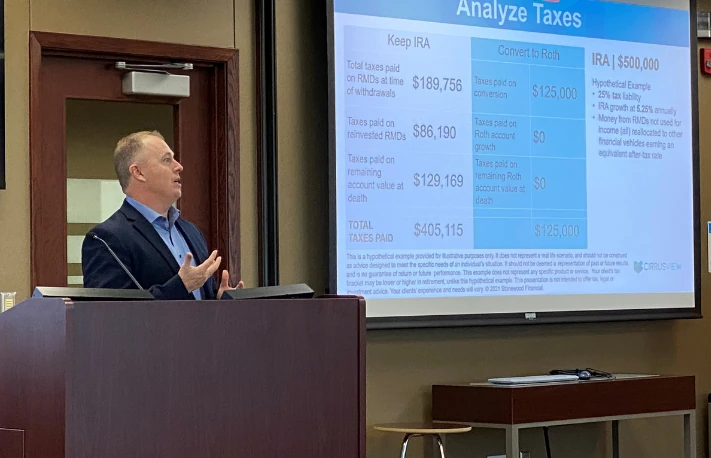
How you analyze challenges and solutions for your prospects has a big impact on whether or not they become clients.
The analysis you show a prospect much accomplish three things: clearly analyze the challenge the saver faces, present the solution, and display the data in a dynamic, easy-to-understand format.
Here are the top four reports right now according to Stonewood users that get prospects across the finish line as clients:
Roth Done Right models multi-year Roth conversion scenarios and accounts for both the short-term and long-term costs of conversion – from taxes to Medicare IRMAA. It can be run in under 60 seconds with no tax return needed. The output is built to serve as a guide for your client meeting, , not a back-office worksheet a saver struggles to understand.. Learn more at stonewoodfinancial.com/software/roth-done-right.
Annuity Alpha gives prospects a side-by-side comparison of the growth needed in a managed account to match a FIA’s guaranteed income. . Savers are often surprised to learn their account would need to deliver double-digit returns to match the guarantee – making the annuity conversation informative and productive. . Learn more at pages.stonewoodfinancial.com/annuityalpha.
Legacy Done Right helps show a family how to maximize after-tax wealth for the next generation. . The analysis can also uncover life and annuity opportunities in the legacy space. Learn more at stonewoodfinancial.com/software/legacy-done-right.
Total Tax Burden produces a fast snapshot of a prospect’s projected taxes – and potential tax savings of working with you. The best part? No tax return needed. Total Tax Burden open the conversation on taxes and builds early trust before you move into deeper client analysis. Learn more at stonewoodfinancial.com/software/total-tax-burden.
Lever 5: Position Yourself as the Expert Before the First Meeting
Savers want to work with advisors they trust, and writing a book is one of the best authority-generators for independent advisors. A book positions you as a thought leader rather than another advisor with a pitch.
Of course, writing a book takes time, and there are quicker ways to build your authority with books. Co-authoring a pre-written book can have you accessing expertise in a matter of days.
Stonewood’s custom book program accredits you as the author of a book’s foreword, with your name, photo, bio and contact information on the cover of the book.
Whether you’re educating your clients on the tax risk from Washington with The Road Less Taxed, or looking at life insurance strategies with The No-Compromise Retirement Plan, customizing one of Stonewood’s proven consumer books is the quickest way to develop authority with your prospects. . If you’ve always wanted your own book but don’t have the time to write one, learn more about customization through Stonewood’s custom book program.
Free Advisor Guide
8 Ways to Turn a Book Into a Lead-Generation Machine
Download 8 Ways to Drive Leads with Books and discover how advisors can use books to warm up cold prospects, create more meaningful follow-up, boost event conversions, and open stronger retirement planning conversations
Get the Free Guide
Lever 6: Sharpen the Conversation Through Training and Coaching
Technical knowledge and client communication are different skills. An advisor who deeply understands a Roth conversion strategy but hasn’t practiced explaining it in plain language will often find that prospects are interested but not converting.
It’s important to keep up with your continuing education – not just CEs for your licensure, but real training on the topics you’re discussing with clients.
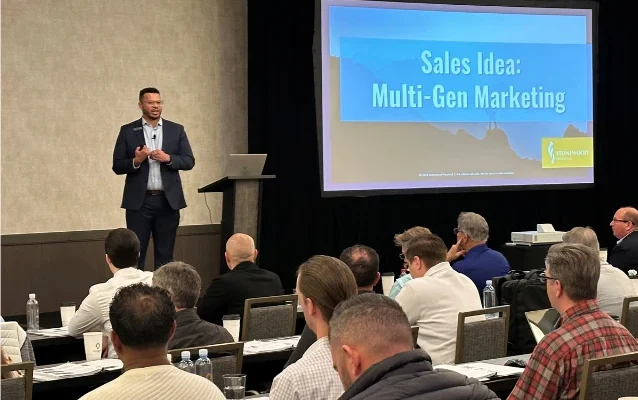
So make sure you’ve dedicated time to learning this year. Stonewood’s Innovate conferences brings independent advisors together for training on tax strategies, income approaches, marketing systems, and the sales language advisors can bring directly into their next prospect meeting.
And Stonewood’s online training library rounds out the picture for advisors who want to work through sales strategy, client conversation approaches, and report walkthroughs on their own schedule, or use it to bring a new team member up to speed.
Lever 7: Build Systems Before You Hire
As a practice grows, the instinct is often to hire. The advisors who scale well tend to build the system first and hire into it, rather than adding staff to a workflow that only exists in the advisor’s head.
That means documenting the onboarding process, the meeting structure, and the compliance review before handing any of it off. Practices that hire before they have systems in place often add cost without adding real capacity, because the new team member still needs the advisor to make every decision. Getting your presentation, marketing and meeting structure consistent first makes the next hire far more productive.
Common Mistakes Advisors Make When Trying to Grow
A few patterns come up often in practices that struggle to grow despite putting in real effort.
Marketing to everyone. A generalist message competes with every other advisor’s generalist message. A defined niche gives prospects a specific reason to choose you.
Treating referrals as passive. Waiting for a client to think of you is not a system. Asking at a specific, repeatable moment is.
Explaining instead of showing. A prospect meeting built around a verbal explanation of a strategy converts less often than one built around a client-facing comparison the prospect can see and follow.
Skipping the systems before hiring. Adding staff to an undocumented process adds cost without adding capacity.
Attending training without implementing it. A conference or coaching program only produces results when the advisor brings a specific goal and follows through afterward.
Bringing the Levers Together: Stonewood Membership
Each strategy above works better in combination with the others. A niche gives your marketing a point of view. Lead generation fills the pipeline. Client-facing software closes the meeting. Books and training build the credibility and skill behind all of it.
Stonewood membership brings the software, marketing tools, and training together in one place. We’re not an IMO. Instead, we help you produce more business through your IMO by delivering exceptional tools that increase business. . Learn more at stonewoodfinancial.com/pricing.
Our tools work with any carrier, through any IMO, on your terms.
Frequently Asked Questions
How do you grow a financial advisory practice?
Advisors grow a financial advisory practice by combining a defined niche, a structured referral system, consistent lead generation, a prospect meeting built around client-facing software, and ongoing training that sharpens how they explain planning concepts. Practices that connect these pieces into a system tend to grow more consistently than those relying on a single tactic.
What is the fastest way to get more clients as a financial advisor?
There’s no single fastest path, but advisors often see the quickest movement by improving what happens in the prospect meeting itself. A client-facing report that shows a specific trade-off, rather than describing it, tends to shorten the trust-building phase and move a prospect toward a decision faster than marketing changes alone.
Do referrals still work for growing a financial advisory practice?
Yes, and for many independent advisors, referrals remain one of the strongest sources of new clients. The advisors who benefit most treat referrals as a system, asking at a specific, repeatable moment, rather than waiting for a client to bring it up on their own.
How does a niche help a financial advisory practice grow?
A defined niche gives prospects a specific reason to choose you over a generalist advisor, since your marketing and first meeting speak directly to a problem they recognize. It also makes referrals more effective, because clients in a tight-knit niche, such as physicians or business owners, tend to know others facing the same planning questions.
What software helps financial advisors close more prospects?
Client-facing planning software helps advisors show, rather than explain, a strategy’s trade-offs. Stonewood offers four tools built for the prospect meeting: Roth Done Right for multi-year Roth conversion and IRMAA analysis, Annuity Alpha for guaranteed income comparisons, Legacy Done Right for estate planning, and Total Tax Burden for a fast tax snapshot.
Is coaching worth it for financial advisors trying to grow?
Many advisors find coaching worthwhile when they enter with a specific goal. A 2024 ICF/PwC Global Coaching Client Study found organizations tracking coaching outcomes reported a median return of 5 to 7 times the cost of the program.2 For an advisory practice, that return can show up in a single closed case.
Should a growing financial advisory practice hire more staff?
Hiring can help a practice scale, but advisors who build documented systems, onboarding, meeting structure, and compliance review, before adding staff tend to see more productive hires. Adding a team member to an undocumented process often adds cost without adding real capacity.
Grow Your Practice With a Connected System
Reviewing your niche, referral process, lead generation, and prospect-meeting approach together, rather than one at a time, tends to surface the gap that’s actually holding growth back.
See how Stonewood’s software, marketing tools and training programs work together as a single growth system for independent advisors.
At Stonewood, we’re not CPAs, and this article is intended to share general, widely available knowledge about taxes and practice growth. Stonewood builds tax analysis tools and training resources to help advisors run better client conversations. For any specific client situation, work with a qualified tax or legal professional.
Sources and References
All information in this article is general knowledge and widely available.
ICF/PwC Global Coaching Client Study, International Coaching Federation and PricewaterhouseCoopers, 2024. Cited for the median coaching return of 5 to 7 times the cost of the program. Available online: https://coachingfederation.org
Stonewood Financial Software Overview. Stonewood Financial, Inc. Accessed July 2026. Cited for the 114,000+ reports run and 8,000+ advisors trained. Available online: https://www.stonewoodfinancial.com/software/
How Stonewood Advisors Stay Ahead of the Next Planning Conversation.
Watch a recent Stonewood Study Group focused on the legacy planning conversation. You’ll see how Stonewood helps advisors break down timely planning topics, client conversation angles, and practical strategies you can put to use immediately.
Expert insights. Real strategies.
Study Group Replay
Timely planning topics
Real client conversation angles
Practical strategies you can use
Real Advisors. Real Results.
See how advisors are using Stonewood software to win larger cases and deliver better
outcomes for their clients.
An advisor was working with a prospect who was a real "do-it-yourselfer" when it came to Roth conversions.
The client was converting assets up their existing tax bracket – and hadn't considered any impact to
IRMAA.
With Roth Done Right, the advisor was able to show an alternate pattern that sped up the conversion to
6 years. The new structure offered $30,000 savings in conversion taxes – a 20% reduction on the
prospect's conversion tax bill. The report also showed hundreds of thousands of dollars in long-term
tax and IRMAA savings from the converted assets – an amount the prospect hadn't been able to quantify
on his own.
Outcome
A new client with $1M in new AUM, and a $1M FIA sale to fund the conversion process.
An advisor was working with a prospect who already had assets with Ken Fisher. Fisher's team presented a
5% systematic withdrawal projection, so the advisor needed a stronger way to frame the income
conversation.
Using the Annuity Alpha report, the advisor showed how an annuity could deliver over 8% in annual cash
flow with lifetime income, plus a long-term care doubler. The contrast was clear enough that the prospect
moved forward.
Outcome
$1.5M placed and a $100K in new business revenue.
An advisor was working with a 58-year-old couple with an established, well-funded retirement income plan,
leaving an additional $3M IRA to build out a legacy for the kids. The couple's existing advisor had no
real additional plan for this money, other than to keep it in their managed account and grow that money as
much as possible for the kids.
Using the Legacy Done Right report, the advisor showed the need for tax planning on this $3M IRA.
According to the advisor, the simple analysis "opened up the wallet" to the Roth conversion story. The
advisor then used the blended Roth/Life feature in the report to show a blend of Roth Conversion assets
with some Life Insurance to help maximize the client’s legacy.
Outcome
$3M in motion. The advisor picked up a $1.5M FIA sale that will be converted to Roth. And the advisor
also sold a 5-Pay Protection focused IUL policy at $225,000 of premium per year.
An advisor group incorporated the Total Tax Burden report into the strategy presentation for all new
prospects. They ran the tax snapshot for every new client as part of their first meeting conversation,
quantifying the growing tax burden of IRA money – and illustrating the kinds of tax savings possible
when working with their firm.
Starting in January of 2023, this simple analysis was presented to every single prospect who walked in
the door. The goal was to differentiate their practice and drive overall revenue growth through various
Roth conversion strategies.
Outcome
From 2022 to 2025, new annual AUM rose from $5M to $50M. Annual FIA sales rose from $3M to $35M.
And annual life premium rose from $50K to $1M.