Quick Answer: What Are the Best Marketing Tips for Financial Advisors in 2026?
The most effective marketing tips for financial advisors combine a clearly defined niche, a structured referral system, social media and content marketing that stays inside SEC and FINRA guidelines, and visibility in AI powered search. Advisors who also plan for slower seasons, rather than letting them pass idly, often start the next year with more momentum. Marketing fills the pipeline. Client facing software is what helps close what the marketing brings in.
A referral stalls. A LinkedIn post gets three likes and no calls. A quarter goes by and the pipeline looks about the same as it did in January.
Many independent advisors already know they should be marketing more. Fewer have a plan that ties the pieces together: who they are trying to reach, how referrals actually turn into appointments, what is allowed on social media, and how a slower season fits into the plan rather than derailing it.
This guide walks through marketing tips that matter for financial advisors in 2026: defining a niche, building a referral system, staying compliant on social media, showing up in AI powered search, and using the quieter months of the year well. Near the end, we look at where client facing software, not just marketing, fits into the picture of closing the business your marketing brings in.
Close More Business with Stonewood Reports
Easy to run. Easy to present. Pick the report that fits your next client conversation and we'll send a sample to your inbox immediately.
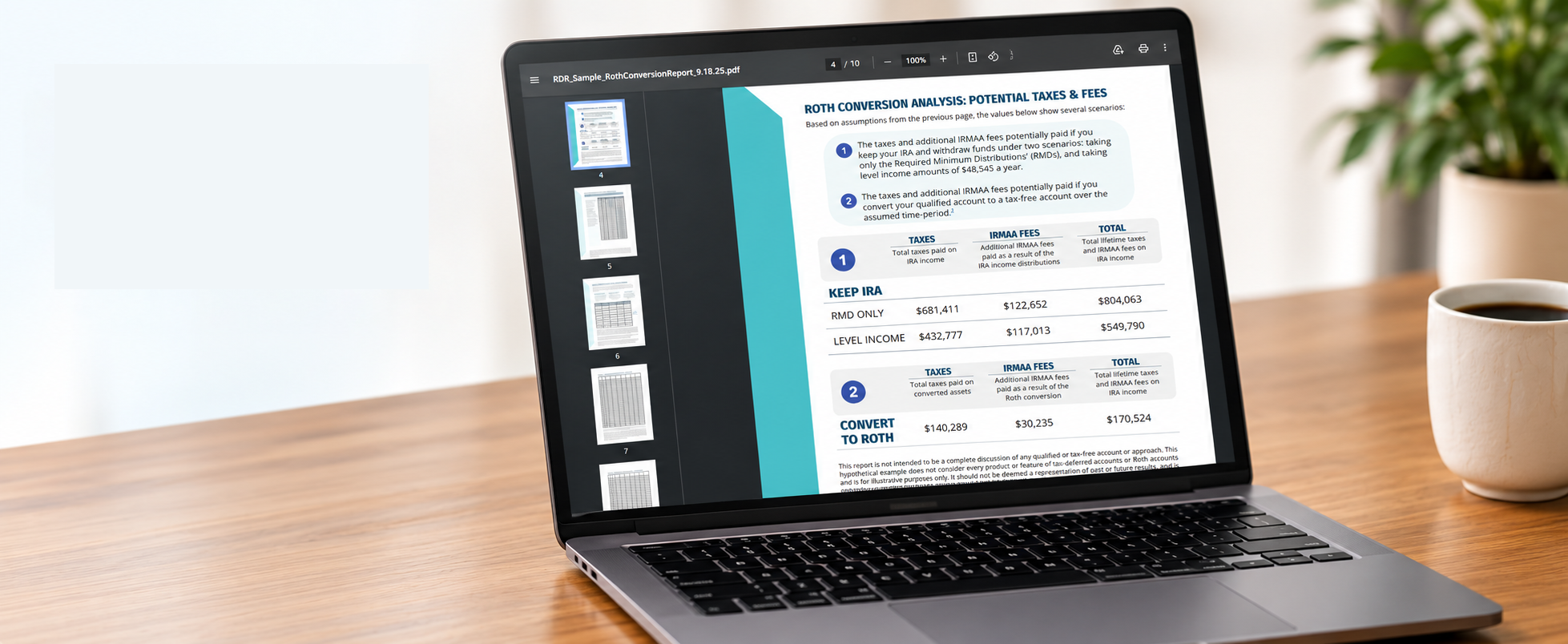
Roth Done RightTax & IRMAA Analysis
Annuity AlphaFIA vs. Managed Account
Legacy Done RightLife Insurance Analysis
Total Tax BurdenRetirement Tax Snapshot
Define Your Niche and Ideal Client Before You Market Anything
Marketing that speaks to everyone tends to convert no one in particular.
Advisors who see a stronger return from their marketing often start by defining a specific niche and a clear picture of their ideal client, sometimes called a client persona. That might mean focusing on physicians nearing retirement, small business owners weighing an exit, or federal employees sorting out pension decisions.
A defined niche sharpens every other tactic in this guide. It shapes what you write about, which keywords your content should target, what questions you answer in a seminar, and what your homepage says in the first few seconds a prospect spends on it.
If you are unsure where to start, look at the clients you already enjoy working with most. What do they have in common? What questions do they ask most often? What worries do they share about retirement, taxes, or income? That pattern is usually where a niche starts to take shape.
For many advisors in Stonewood’s network, that niche is the mass affluent saver approaching retirement with meaningful IRA balances, the audience Roth Done Right and Total Tax Burden are built to serve. Defining that audience clearly is what makes the tactics below land with the right people.
Free Advisor Training
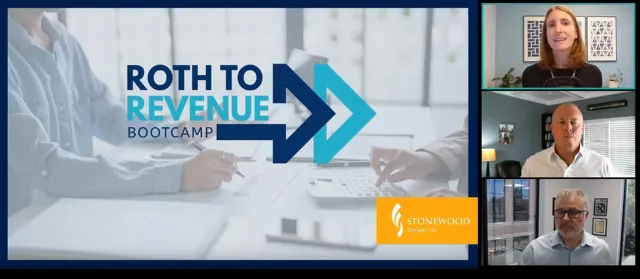
Turn Roth Conversations Into Revenue
Watch this complimentary training to learn how leading advisors use retirement tax concerns to create urgency, open Roth conversion conversations, and uncover valuable new planning opportunities.
Get Instant Access to the Training
Build a Referral System, Not Just a Referral Hope
Referrals remain one of the highest converting ways financial advisors bring in new clients, and advisors who build a structured process around them tend to see more consistent results than those who wait for referrals to happen on their own.
According to a 2024 industry survey, advisors with a defined marketing approach, including a referral process, generate more leads each month and onboard more new clients each year than advisors without one (Broadridge Financial Advisor Marketing Trends Report, Broadridge Financial Solutions and AdvisorStream, 2024). Separate research on how financial planners actually market their services found that many advisors maintain some kind of referral relationship with centers of influence, such as attorneys and CPAs, and that referrals often convert faster than other prospect sources (Kitces Report, “How Financial Planners Actually Market Their Services,” Michael Kitces, Nerd’s Eye View, 2024).
A structured referral system usually includes a few pieces: asking current clients directly rather than waiting for a referral to happen, building relationships with a small number of centers of influence who already see your ideal client, and following up personally whenever a referral does come in, so the relationship feels valued rather than transactional.
Client appreciation events can support this system well. Inviting clients to bring a guest to a casual gathering tends to create natural introductions in a lower pressure setting than a first office meeting.
Free Advisor Training
Turn Roth Conversations Into Revenue
Watch this complimentary training to learn how leading advisors use retirement tax concerns to create urgency, open Roth conversion conversations, and uncover valuable new planning opportunities.
Video Training
Create urgency around tax planning
Open more Roth conversion conversations
Uncover new planning opportunities
Understanding the Holiday Slowdown
During the holidays, clients often shift their focus away from financial matters.
You might notice:
Reduced Communication: Clients are slower to respond to emails or calls as they prioritize family and celebrations.
Delayed Decision-Making: Many decisions are postponed until after the new year.
Increased Online Engagement: Despite being busy, clients often scroll through social media or read articles during their downtime.
Recognizing these trends allows you to adjust your efforts and make the most of this quieter period.
Evaluating and Enhancing Your Current Strategy
Take this time to review your current marketing and outreach initiatives.
Ask yourself:
Are my marketing campaigns effective?
How responsive is my website and social media presence?
What feedback have I received from clients?
Use these insights to identify areas for improvement, such as updating your website, improving client communication, or refining your social media strategy.
Social Media Marketing Tips: What’s Allowed and What Isn’t
Social media has become one of the more common places advisors show up for prospects, but it is one of the more heavily regulated as well. Two rulebooks shape what you can post: FINRA Rule 2210, which governs communications with the public and generally requires firm oversight of advisor content (“Rule 2210. Communications with the Public,” Financial Industry Regulatory Authority), and the SEC Marketing Rule, which governs how registered investment advisers can use testimonials, endorsements, and performance claims (“Investment Adviser Marketing,” Rule 206(4)-1, U.S. Securities and Exchange Commission).
In practice, that means running posts through your firm’s compliance workflow before they go live, avoiding specific investment recommendations or performance promises in a public post, and keeping a record of what you publish. It does not mean staying off social media altogether. Research from Putnam Investments found that a large share of advisors already use social media for business, with many reporting meaningful asset gains tied to their activity (as cited in “Guide to Social Media Compliance for Financial Services,” Hootsuite).
LinkedIn tends to be the platform where advisors see the most traction, since it is where many prospects already expect to see professional, educational content. A simple rule of thumb: post about the questions clients already ask you, keep claims general rather than specific to any one product or return, and loop your compliance team in early rather than after a post is already up.
Strengthening Your Online Presence
The holiday season is a great time to polish your digital footprint:
Update Your Website: Add fresh, relevant content, ensure smooth navigation, and consider features like online appointment scheduling or a client portal.
Boost Social Media Profiles: Share financial tips and content, engage with followers, and ensure your profiles are complete and professional.
Use SEO: Incorporate industry-relevant keywords and create valuable content to improve search engine visibility. It’s also worth thinking about how your content shows up in AI powered search tools, not just traditional Google results, a practice sometimes called Answer Engine Optimization, which we cover next. (We wrote a blog on this recently, check it out here.)
Show Up in AI Powered Search: Answer Engine Optimization (AEO)
A growing share of prospects now ask AI tools like ChatGPT, Gemini, or Perplexity for recommendations before they ever type a query into Google. That shift has created a newer discipline some in the industry call Answer Engine Optimization, or AEO: writing content that directly and clearly answers the questions a prospect is likely to ask an AI assistant.
In practice, AEO looks a lot like good content marketing with a few adjustments. Structure articles around a clear question and a direct answer near the top, use plain language rather than jargon, and keep individual pages focused on one topic rather than several. AI tools tend to favor content that is well organized and easy to summarize.
This does not replace traditional SEO. It sits alongside it. Advisors who invest in both tend to be more likely to show up whether a prospect searches on Google or asks an AI assistant directly.
Creating and Sharing Valuable Content
Position yourself as a trusted advisor by developing content that resonates with your audience:
Write Blogs or Articles: Share year-end tax tips, financial planning checklists, or investment insights for the new year. Our Stonewood Financial blog is a great example of this.
Produce Videos: Create engaging videos explaining financial concepts or offering a holiday message to clients.
Host Webinars: Discuss timely topics like setting financial goals or year-end tax planning. (Watch our most recent Stonewood State of the Union Webinar here.)
Grow With Online Reviews and Testimonials
The SEC Marketing Rule, in effect since 2021, opened the door for registered investment advisers to use client testimonials and endorsements in marketing for the first time in decades, as long as specific disclosure requirements are met (“Investment Adviser Marketing,” Rule 206(4)-1, U.S. Securities and Exchange Commission). That is a meaningful shift for an industry that had been mostly boxed out of the kind of social proof other professional services rely on.
Consumer research suggests this matters to prospects well before they ever call. One 2026 survey found that roughly a quarter of consumers check a local business’s social profiles after finding it in a search, and a large majority say they favor businesses with an active online presence and positive reviews (BrightLocal 2026 consumer trust research, as cited in “Social Media for Financial Advisors: A Compliance First Guide,” Apaya).
If you decide to build testimonials into your marketing, work closely with your compliance team on the disclosure language required and on where reviews can be linked from. This is one area where getting the compliance details right matters as much as collecting the reviews in the first place.
Investing in Professional Development
Stay ahead in your field by using this downtime to sharpen your skills:
Attend Webinars or Workshops: Many organizations host year-end educational events online or in-person events to kick the year off. If you are looking for a training event to start your year off strong, register for our Innovate Summit Training Conference.
Pursue Certifications: Start working toward certifications or advanced education relevant to your field.
Read Industry Publications: Dive into books or articles to stay informed about trends and best practices.
For a deeper look at how coaching and training programs fit into a growth plan, see our guide to financial advisor coaching programs.
Free Advisor Guide
8 Ways to Turn a Book Into a Lead-Generation Machine
Download 8 Ways to Drive Leads with Books and discover how advisors can use books to warm up cold prospects, create more meaningful follow-up, boost event conversions, and open stronger retirement planning conversations
Get the Free Guide
Streamlining Operations
Use the slower pace to improve your practice’s efficiency:
Update Your CRM: Clean up data, add new client details, and ensure your systems are optimized for the new year.
Automate Administrative Tasks: Set up tools to save time and standardize processes.
Explore New Technology: Implement software or tools that enhance client engagement and internal workflows. Our Retirement Tax Bill lead generation tool is a great place to start.
What Financial Advisors Are Actually Spending on Marketing
Marketing budgets vary widely by firm size and channel mix, but a couple of benchmarks are worth knowing. Research cited by RightCapital found that advisor marketing spend averages around $15,908 a year, with a lower median of roughly $6,250, and that solo advisors typically spend just under $9,000 a year compared to larger teams (“Financial Advisor Marketing: 8 Ways to Attract New Clients,” RightCapital, 2025).
The same Broadridge research referenced earlier found that advisors with a defined marketing approach generate meaningfully more leads and onboard more clients than those without one (Broadridge Financial Advisor Marketing Trends Report, 2024). The takeaway is less about hitting a specific dollar figure and more about being intentional: a modest, consistently executed plan tends to outperform a larger budget spent without a clear strategy behind it.
Planning for the Year Ahead
Finally, take this opportunity to set your sights on the upcoming year:
Define Goals: Outline revenue targets, client acquisition numbers, and professional milestones for the next quarter.
Develop an Action Plan: Break your goals into actionable steps and establish timelines to keep you on track.
Embracing the Holiday Downtime
While the holiday slowdown may feel unproductive at first glance, it’s a valuable chance to reflect, strategize, and strengthen your business. By taking proactive steps now, you can set yourself up for a busy and successful new year.
Remember, your efforts during the quieter times are what will help you shine when business picks up again.
Where Stonewood’s Software Fits Into Your Marketing Plan
Everything above is about getting in front of the right prospects. None of it closes business on its own. That is where a separate part of the growth engine comes in: what happens once a prospect is sitting across from you.
Stonewood offers four client facing software tools built specifically for that moment in the meeting, distinct from the marketing tactics above. Roth Done Right models multi-year Roth conversion scenarios and the short and long term IRMAA cost of converting. Annuity Alpha compares a fixed indexed annuity’s guaranteed income, subject to the claims paying ability of the issuer, against a brokerage account alternative. Legacy Done Right shows a family the potential after-tax picture of a wealth transfer strategy. Total Tax Burden gives a saver a fast tax snapshot without requiring a full tax return.
Advisors often pair the two halves of this guide together: a niche-driven content and referral strategy to fill the calendar, then one of these reports to make the trade-offs visible once the prospect is in the room. Stonewood is not an IMO. We do not distribute products, take a commission cut, or push a specific carrier, so these tools work alongside whatever marketing stack and IMO relationship you already have.
You can request a free sample report or see the full suite at stonewoodfinancial.com/software.
Keep Reading on the Stonewood Blog
How to Find Clients as a Financial Advisor: A Practical Growth Guide
Financial Advisor Coaching Programs: A Practical Guide to Growing Your Practice
Financial Advisor Marketing Tools: A Toolkit for Independent Advisors
SEO Made Easy: Financial Advisors’ Top Tips and Tricks
Social Media Content for Financial Advisors
Frequently Asked Questions
What are the best marketing tips for financial advisors in 2026?
The advisors who grow most consistently tend to combine a defined niche, a structured referral system, social media and content marketing that stays inside FINRA and SEC guidelines, and visibility in both traditional and AI powered search. Using slower seasons of the year to strengthen these pieces, rather than letting them pass idly, is part of the plan rather than separate from it.
What can financial advisors post on social media?
Advisor social media content generally needs to go through a firm compliance workflow under FINRA Rule 2210, and any use of testimonials or client endorsements needs to meet the disclosure requirements in the SEC Marketing Rule. Educational content that avoids specific performance claims or product recommendations tends to be the safest and most effective category to post regularly.
How much should a financial advisor spend on marketing?
Reported advisor marketing spend varies widely, with one industry estimate putting the average around $15,908 a year and the median closer to $6,250, according to research cited by RightCapital in 2025. Solo advisors tend to spend less than larger teams. Consistency in executing a plan tends to matter more than the total dollar figure.
Can financial advisors use client testimonials in marketing?
Yes, under the SEC Marketing Rule in effect since 2021, registered investment advisers can use client testimonials and endorsements as long as required disclosures are met. This is a newer option for the industry, so it is worth working closely with your compliance team on the specific language and placement required.
What is Answer Engine Optimization (AEO) for financial advisors?
AEO is the practice of structuring website content so that AI tools such as ChatGPT, Gemini, or Perplexity can easily surface it as a direct answer to a prospect’s question. It works alongside traditional SEO rather than replacing it, and tends to favor clear, well organized answers over dense or jargon-heavy pages.
Does Stonewood’s software help with marketing?
Stonewood’s four software tools, Roth Done Right, Annuity Alpha, Legacy Done Right, and Total Tax Burden, are built for the client meeting rather than the marketing funnel itself. They work alongside the marketing tactics in this guide by helping an advisor make the trade-offs of a strategy visible once a prospect is already in the room.
Sources and References
All information in this article is general knowledge and widely available.
2024 Broadridge Financial Advisor Marketing Trends Report. Broadridge Financial Solutions and AdvisorStream. 2024. Cited for lead and client acquisition figures for advisors with a defined marketing approach. Available online: https://info.advisorstream.com/financial-advisor-marketing-trends-report-2024
“How Financial Planners Actually Market Their Services,” The Kitces Report, Vol. 1, 2024. Michael Kitces, Nerd’s Eye View. Cited for referral and centers-of-influence data. Available online: https://www.kitces.com/kitces-report-financial-planner-advisor-marketing-tactics-strategies-referrals-centers-influence-networking/
“Rule 2210. Communications with the Public.” Financial Industry Regulatory Authority (FINRA). Available online: https://www.finra.org/rules-guidance/rulebooks/finra-rules/2210
“Investment Adviser Marketing,” Rule 206(4)-1. U.S. Securities and Exchange Commission. Cited for testimonial and endorsement disclosure requirements. Available online: https://www.sec.gov/investment/investment-adviser-marketing
“Financial Advisor Marketing: 8 Ways to Attract New Clients.” RightCapital. 2025. Cited for advisor marketing spend benchmarks. Available online: https://www.rightcapital.com/blog/financial-advisor-marketing/
“Guide to Social Media Compliance for Financial Services.” Hootsuite. Cited for Putnam Investments social media adoption research. Available online: https://www.hootsuite.com/resources/advisors-guide-to-social-media-compliance
“Social Media for Financial Advisors: A Compliance-First Guide.” Apaya. Cited for BrightLocal 2026 consumer trust research. Available online: https://apaya.com/blog/social-media-for-financial-advisors
Free Study Group Replay
How Stonewood Advisors Stay Ahead of the Next Planning Conversation.
Watch a recent Stonewood Study Group focused on the legacy planning conversation. You’ll see how Stonewood helps advisors break down timely planning topics, client conversation angles, and practical strategies you can put to use immediately.
Expert insights. Real strategies.
Study Group Replay
Timely planning topics
Real client conversation angles
Practical strategies you can use
Real Advisors. Real Results.
See how advisors are using Stonewood software to win larger cases and deliver better
outcomes for their clients.
An advisor was working with a prospect who was a real "do-it-yourselfer" when it came to Roth conversions.
The client was converting assets up their existing tax bracket – and hadn't considered any impact to
IRMAA.
With Roth Done Right, the advisor was able to show an alternate pattern that sped up the conversion to
6 years. The new structure offered $30,000 savings in conversion taxes – a 20% reduction on the
prospect's conversion tax bill. The report also showed hundreds of thousands of dollars in long-term
tax and IRMAA savings from the converted assets – an amount the prospect hadn't been able to quantify
on his own.
Outcome
A new client with $1M in new AUM, and a $1M FIA sale to fund the conversion process.
An advisor was working with a prospect who already had assets with Ken Fisher. Fisher's team presented a
5% systematic withdrawal projection, so the advisor needed a stronger way to frame the income
conversation.
Using the Annuity Alpha report, the advisor showed how an annuity could deliver over 8% in annual cash
flow with lifetime income, plus a long-term care doubler. The contrast was clear enough that the prospect
moved forward.
Outcome
$1.5M placed and a $100K in new business revenue.
An advisor was working with a 58-year-old couple with an established, well-funded retirement income plan,
leaving an additional $3M IRA to build out a legacy for the kids. The couple's existing advisor had no
real additional plan for this money, other than to keep it in their managed account and grow that money as
much as possible for the kids.
Using the Legacy Done Right report, the advisor showed the need for tax planning on this $3M IRA.
According to the advisor, the simple analysis "opened up the wallet" to the Roth conversion story. The
advisor then used the blended Roth/Life feature in the report to show a blend of Roth Conversion assets
with some Life Insurance to help maximize the client’s legacy.
Outcome
$3M in motion. The advisor picked up a $1.5M FIA sale that will be converted to Roth. And the advisor
also sold a 5-Pay Protection focused IUL policy at $225,000 of premium per year.
An advisor group incorporated the Total Tax Burden report into the strategy presentation for all new
prospects. They ran the tax snapshot for every new client as part of their first meeting conversation,
quantifying the growing tax burden of IRA money – and illustrating the kinds of tax savings possible
when working with their firm.
Starting in January of 2023, this simple analysis was presented to every single prospect who walked in
the door. The goal was to differentiate their practice and drive overall revenue growth through various
Roth conversion strategies.
Outcome
From 2022 to 2025, new annual AUM rose from $5M to $50M. Annual FIA sales rose from $3M to $35M.
And annual life premium rose from $50K to $1M.