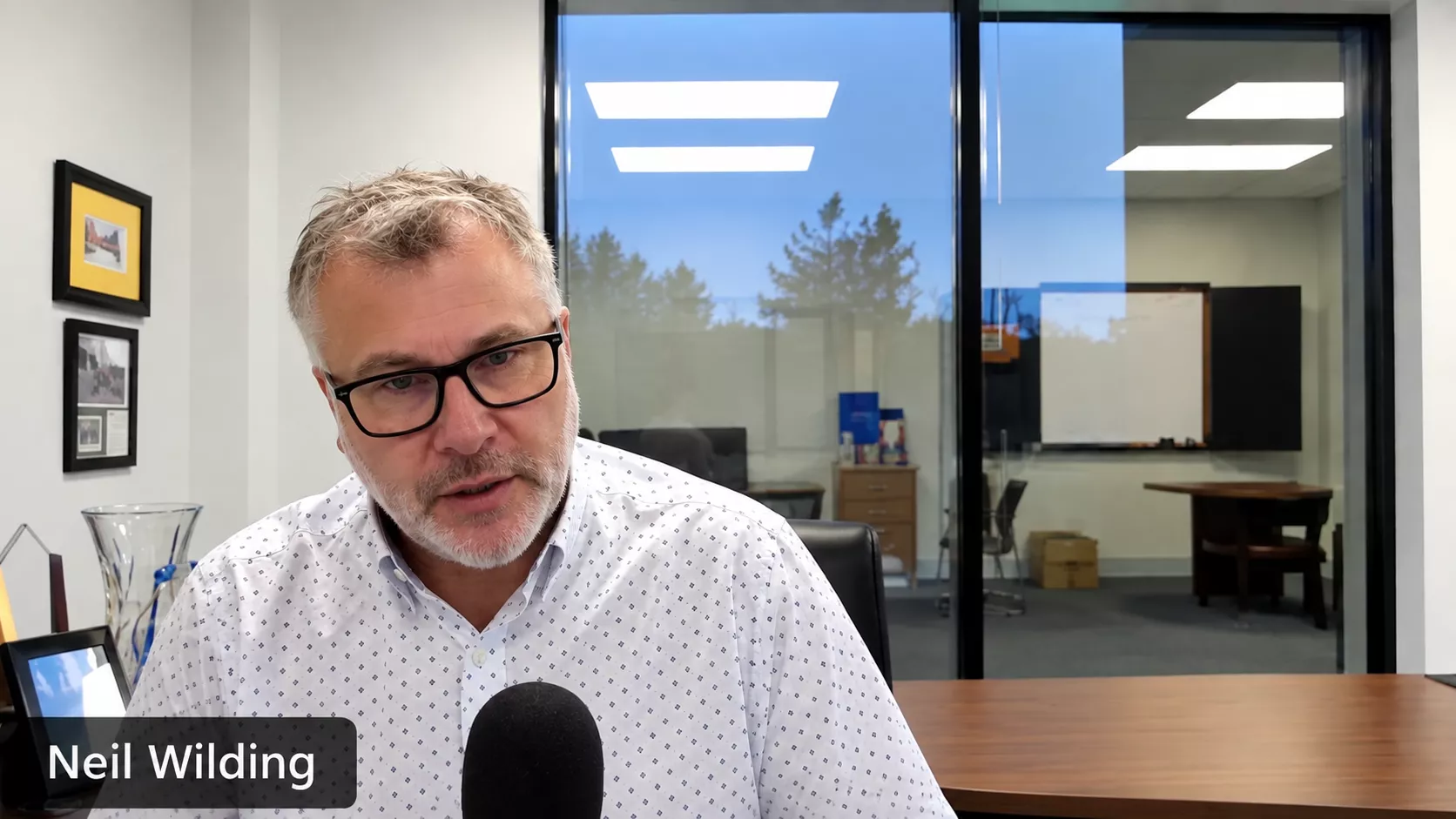
It doesn’t take an actuary to know today’s market is in a volatile tumble. The social distancing protocol of the COVID-19 pandemic has sent markets – and the economy – into a tailspin. (You can watch my take on it all here.) It’s easy for your clients to grasp the short-term impact of this market volatility – they can just look at their IRA or 401(k) balances. Nearly three years of market gains were wiped out in a few bad weeks.
But here’s what many people don’t realize.
If you track the S&P 500® total return from the beginning of this century (January 2000) to the beginning of this year (January 2020), the average annual return was 6.02%.
Not too bad.
But if you tracked the S&P 500® total return from the beginning of this century (January 2000) to last month (March 2020), the average annual return falls to 4.4%.
A few bad weeks in the market lowered the entire CENTURY’s average return by 1.5%.
My takeaway? Savers need diversification against market risk, and also the market’s impact on their ability to generate income in retirement.
But that’s likely advice you already know.
While the market is getting all the headlines, it’s not the only concern for your clients and prospects.
And if you’re only focused on protecting their retirement assets from the market, you’ll miss the opportunity to help savers mitigate a HUGE long-term risk to their funds.
Here’s why: In response to COVID-19’s economic impact, Congress and the President got to work. They passed into law several bills dramatically expanding public welfare programs, delivering checks to low- and middle-income workers, and creating $2 TRILLION in new economic stimulus spending.
These efforts are aimed at our short-term economic crisis, but they have long-term impact.
$2 trillion in new spending dramatically increases the U.S. deficit. And one day, America will have to find a way to pay for it.
That day is apparently not today. A few weeks ago, U.S. Treasury Secretary Steve Mnuchin commented, “In different times, we’ll fix the deficit. This is not the time to worry about it.”
Well, Mr. Mnuchin, this may not be the time for our government to worry about it, but it’s sure the time for America’s savers to be concerned. After all, how will the government “worry” about the deficit when the time comes? The best way it knows how:
Higher taxes.
We already knew taxes were going up in 2026. That’s because the tax bracket reductions that were passed as part of the Trump tax law expire in 2025. Today, we’re in an artificially low tax environment.
But now, with trillions of dollars in new debt, the U.S. is even more likely to need higher taxes in the future. And if all your clients’ assets are in tax-deferred vehicles – like 401(k)s and IRAs – then they’re exposed to a tremendous amount of future tax risk.
My takeaway? While the nation may be focused on the market today, the most important thing you can do for your clients in the weeks ahead is help them manage their taxes for the future. And this means diversifying their retirement assets to include tax-free vehicles, like IUL.
Curious to see how Stonewood Financial helps advisors evaluate taxes for their clients? Watch this video. Then, let’s talk.
By focusing on shorter-term market concerns and longer-term tax concerns, you can help prepare your clients for whatever the future brings.
Free Study Group Replay
How Stonewood Advisors Stay Ahead of the Next Planning Conversation.
Watch a recent Stonewood Study Group focused on the legacy planning conversation. You’ll see how Stonewood helps advisors break down timely planning topics, client conversation angles, and practical strategies you can put to use immediately.
Expert insights. Real strategies.
Study Group Replay
Timely planning topics
Real client conversation angles
Practical strategies you can use
Real Advisors. Real Results.
See how advisors are using Stonewood software to win larger cases and deliver better
outcomes for their clients.
An advisor was working with a prospect who was a real "do-it-yourselfer" when it came to Roth conversions.
The client was converting assets up their existing tax bracket – and hadn't considered any impact to
IRMAA.
With Roth Done Right, the advisor was able to show an alternate pattern that sped up the conversion to
6 years. The new structure offered $30,000 savings in conversion taxes – a 20% reduction on the
prospect's conversion tax bill. The report also showed hundreds of thousands of dollars in long-term
tax and IRMAA savings from the converted assets – an amount the prospect hadn't been able to quantify
on his own.
Outcome
A new client with $1M in new AUM, and a $1M FIA sale to fund the conversion process.
An advisor was working with a prospect who already had assets with Ken Fisher. Fisher's team presented a
5% systematic withdrawal projection, so the advisor needed a stronger way to frame the income
conversation.
Using the Annuity Alpha report, the advisor showed how an annuity could deliver over 8% in annual cash
flow with lifetime income, plus a long-term care doubler. The contrast was clear enough that the prospect
moved forward.
Outcome
$1.5M placed and a $100K in new business revenue.
An advisor was working with a 58-year-old couple with an established, well-funded retirement income plan,
leaving an additional $3M IRA to build out a legacy for the kids. The couple's existing advisor had no
real additional plan for this money, other than to keep it in their managed account and grow that money as
much as possible for the kids.
Using the Legacy Done Right report, the advisor showed the need for tax planning on this $3M IRA.
According to the advisor, the simple analysis "opened up the wallet" to the Roth conversion story. The
advisor then used the blended Roth/Life feature in the report to show a blend of Roth Conversion assets
with some Life Insurance to help maximize the client’s legacy.
Outcome
$3M in motion. The advisor picked up a $1.5M FIA sale that will be converted to Roth. And the advisor
also sold a 5-Pay Protection focused IUL policy at $225,000 of premium per year.
An advisor group incorporated the Total Tax Burden report into the strategy presentation for all new
prospects. They ran the tax snapshot for every new client as part of their first meeting conversation,
quantifying the growing tax burden of IRA money – and illustrating the kinds of tax savings possible
when working with their firm.
Starting in January of 2023, this simple analysis was presented to every single prospect who walked in
the door. The goal was to differentiate their practice and drive overall revenue growth through various
Roth conversion strategies.
Outcome
From 2022 to 2025, new annual AUM rose from $5M to $50M. Annual FIA sales rose from $3M to $35M.
And annual life premium rose from $50K to $1M.